While using my Android phone to dictate a comment to a Facebook post about Passover, I said “whole wheat matza.” The phone rendered it as “whole wheat monsters.”
I thought that was hilarious until I tried it a second time and got “whole wheat matcha.” Then I was reminded of the many times that I have tried to use an expression rooted in the Jewish tradition and gotten extreme weirdness. Challah, the bread eaten on the Sabbath, became Holla or Color when I tried just now. I’ve gotten others in the past. Todah rabah (thank you in Hebrew) showed up today as tada rava and sometimes as something even stranger, while mazel tov (literally, good luck, but usually translated as congratulations) usually turns into muscle tough.
But I also note that the same problem exists using phrases from other languages. If I say something in Spanish, for example, I usually have to retype it. Given how much Google knows about AI, I would expect that after more than a decade of Android use, it would anticipate some of my words correctly.
I wonder if any Jews or Latines work on the programming team—and how Google might correct for cultural bias in its dictation software..
This could be quite the game-changer: a new technology that turns gas piping from a useless and expensive “stranded asset” to a powerful lever to green entire business and residential districts. And New York State just passed a law to encourage it.
On a quick look, I don’t see any obvious flaws. Do you? Please leave it in a comment. I’ll be taking a more in-depth look at this in my March newsletter. If you’re not a subscriber yet, please visit any page at my main website, https://goingbeyondsustainability.com/ You’ll get some nice gifts for subscribing, too.
[Editor’s Note: I’ve been a fan of Bob Burg since discovering his “Winning WITHOUT Intimidation newsletter, about the power of being nice even when the other person isn’t, sometime in the mid’90s. He’s also known for “Endless Referrals” (how to network the right way)and the series of Go-Giver books. While he has discontinued that wonderful publication, he now offers a daily dose of inspiration called “Daily Impact,” which you can subscribe to by visiting https://burg.com/ , scrolling, and waiting for the pop-up subscription box. Being a fan for so long, I was delighted that Bob endorsed my most recent book, Guerrilla Marketing to Heal the World. The rest of this post was taken from that newsletter and used with his graceful permission.
Bob Burg: The Surprising Benefits of This Powerful Trait
Notable: Named by Harvard Business Review as one of the decade’s top 100 most successful CEOs, Mr. Allison and BB&T refused to participate in the subprime lending calamity leading up to the 2007 financial meltdown, choosing to write only conventional mortgages. He stated that the decision, as opposed to the majority of his banking colleagues, was actually an easy one for him to make. Why? Because subprime mortgages were contrary to the principles upon which he and his bank stood, i.e., “making their profit through providing value to their clients.” And when the cards came crashing down, his bank was left standing, both in great reputation and immense profitability.
After a brief but brilliant explanation regarding how one cannot act with integrity if one’s values are either contradictory or not aligned with reality, Mr. Allison made what I felt was another profound point…
Important: “Many people view integrity as some form of duty. Integrity is not a duty. It is a means to improve the probability of being successful and happy.”
A powerful statement because…
Key Point: If one displays integrity *only* out of obligation to others, he or she cannot be truly happy. It’s only when one lives with integrity because it is congruent with their own values and how they wish to relate to the world that it can lead to happiness and personal fulfillment.
The *additional* benefit to living with integrity is that others respect you; they trust you more…and they are more likely to want to be in relationship with you (both personally and professionally).
Yes, living with integrity certainly makes you more *valuable* to those whose lives you touch and influence.
It affects *you,* however, on a much deeper level.
Because, when it comes right down to it…
End Result: It allows you to genuinely feel good about yourself and live with a sense of joy, peace of mind, and happiness.
And isn’t that how you want to feel and to live?
Today’s Exercise: Discuss the above premise (that integrity is about internal *self*-benefits first and external benefits second) with different groups of people: your team members, entrepreneurs, friends, your children, etc. See where the agreement and disagreement might be. Could make for some interesting conversations and deep-level thinking.
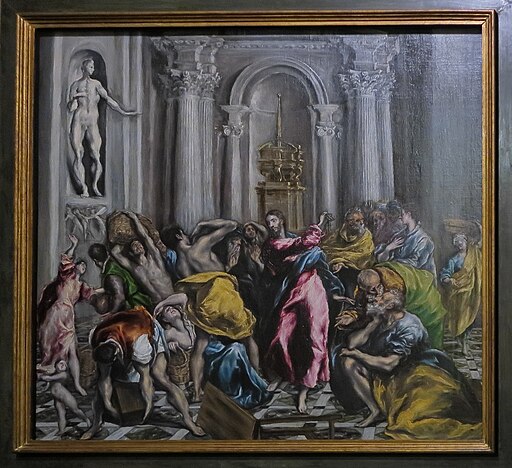
El Greco’s painting of Jesus chasing the money changers out of the temple. Via Wikipedia.
There is a part of me that hopes the Republican Party nominates DeSantis, because when he loses the general election by a huge margin, it will be a repudiation of the entire loathsome cloak of hatred that DT and RDS both stand for. No one will be able to make a case that it was merely a rejection of DT’s criminal activity, egomania, lack of loyalty to those who stood by him, and/or incompetence.
I like to think–and maybe it’s a delusion–that the vast majority of US voters want no truck with either of these men’s open racism, homophobia/transphobia, self-defined “Christian” nationalism, xenophobia, attacks on women’s reproductive rights, love of guns more than the right not to be randomly shot, and all the rest of it.
If I were to flag every passage of Jesus living His life and preaching His truth in direct opposition to the intolerance, violence, and small-mindedness of these “Christians,” this post would go on for many pages. But the elevator-pitch version is simply this: If you call yourself a Christian and claim to follow the teachings of Jesus, you must be willing to accept and even celebrate values like peace, nonviolence, diversity, equality, respect for the natural environment, fair treatment of “the stranger” (immigrants, those of different races or ethnicities or gender orientation), and improving the lot of the poor and the ostracized.
And as an immigration justice, social justice, and environmental activist who has read the Gospels more than once even though I’m not a Christian, I welcome His allyship.
One of the most fascinating talks I’ve ever heard happened this morning on a guided bush walk in Kruger National Park, South Africa, delivered from atop a huge termite mound.
Standing atop a giant termite mound, Ranger Nico explains why termites are critical in the South African ecosystem and how they make the giant predators possible. Photo by Shel Horowitz.
Termites are largely responsible for shaping and managing the ecosystem that allows the magnificent animals we see on safaris: the elephants, lions, giraffes, zebras, and more. They are master builders, creating mounds and underground caverns (two or three times as big as the visible parts of the mounds) that can stretch 50 meters into the earth.
Termites invented climate control millions of years ago. They move wet earth astonishing distances to plaster the walls, creating an ideal environment for the fungus their queen loves to eat, and they build chimneys—heat vents they can open and close—to maintain the ideal temperature for the queen’s comfort. They are such sophisticated engineers that some plaster casts of abandoned mounds have required pumping in ten tons of plaster.
That queen starts tiny but eventually reaches a length of five inches or so, loses her legs, and turns her attention to hive management and reproduction. But not just any kind of reproduction! She picks the type of worker the colony needs at that moment and produces farmers, soldiers, attendants staff who attend to her needs as commanded by pheromones, flying termites (including scouts, wood scavengers, and future kings and queens who go off to start new colonies), and other types as needed.
These different types have biological differences, each equipped for their own mission. And she will lay about 40,000 eggs every day, but most of the young’uns will only live for a few days. Still, a large mound can have hundreds of thousands of inhabitants.
The queen outlives thousands of generations of her offspring. At the end of her 30- to 40-year life, she clones herself and produces one new queen, genetically identical, who will manage the same mound—so some of these mounds are centuries old, with a ruler identical to the mound’s female co-founder. Her partner is a king who fertilizes the queen, and paired couples fly off to start the new mounds—a complex process where both of them find a soft digging spot they can manage without the tools of the construction-worker termites and begin digging and egg-laying exactly three days before a significant rainfall.
The eggs take three days to gestate and require lots of moisture. If a queen dies before cloning herself, the whole colony dies. Queens cannot be introduced from elsewhere, and the workers lose all interest in their tasks—or in living—without a queen.
And here’s why this is a problem: Not only do termites clear the dead wood around them by digesting it, the mounds and chambers provide enormous nutritional boost to the soil. Termites are what creates the richness that allows grasses, shrubs, and trees to flourish. Without all that, the herbivores like elephants, giraffes, rhinos, impalas, hippos, warthogs, etc. would have nothing to eat and would not exist. And without them, the apex predators including the big cats would not have their food.
So if you’ve gone on safari and seen these beautiful animals in the wild, you can thank the termites. And the best way to thank them is to recognize their role and not use pesticides against them. If you live in a termite-prone area, treat the wood of your house instead of fogging the air with poison that poisons you, your family, and the much-needed termites—and help your friends understand that when we treat nature as a teacher and ally, the results are far better than if we treat her as an enemy.
Other tidbits from this hike: • Elephants will destroy one marula tree at a time to get the fruit—but their digestive enzymes activate the seeds, so when they poop them back out and natural forces spread them, a thousand marula trees could germinate from the single sacrificed one.
• Elephant tracks look kind of like snowshoe tracks. You can tell females form males because if it’s a female, you’ll also find tracks from the babies.
• Spear grass seed will actually drill itself into a growing medium by spinning in one direction. Even though they can’t survive there, they will even drill into human skin and you can’t get them out with tweezers. Nico’s mentor used to always carry a medical scalpel to excise them. Nico prefers to avoid them in the first place.
Re: The Problem with Green Standard Offerings: You write, “focus on the main issue, health-focused cleaning; directing energy to one and not two main goals: health or sustainability, not both, or you compromise the program.” We need a reframing here.
The question is not whether to choose health over green practices (of course we do!). The better question is how to achieve the health outcomes while also minimizing negative and maximizing positive environmental impacts. As one very easy example, how much packaging do we really need? Does it really increase safety to wrap every component of a kit individually, place the wrapped components on a foam tray, wrap the entire inner contents, box the wrapped set, and then add another layer of shrinkwrap around the box, stick the box in a case with 11 others, shrinkwrap the case, stack cases on a pallet, and then wrap the pallet?
For that matter, could some of the components in that kit be used again? Why do we design so many products to be used once and then thrown away?
My comment ended there–but that’s only the beginning of a much larger discussion. Some other questions to raise would include:
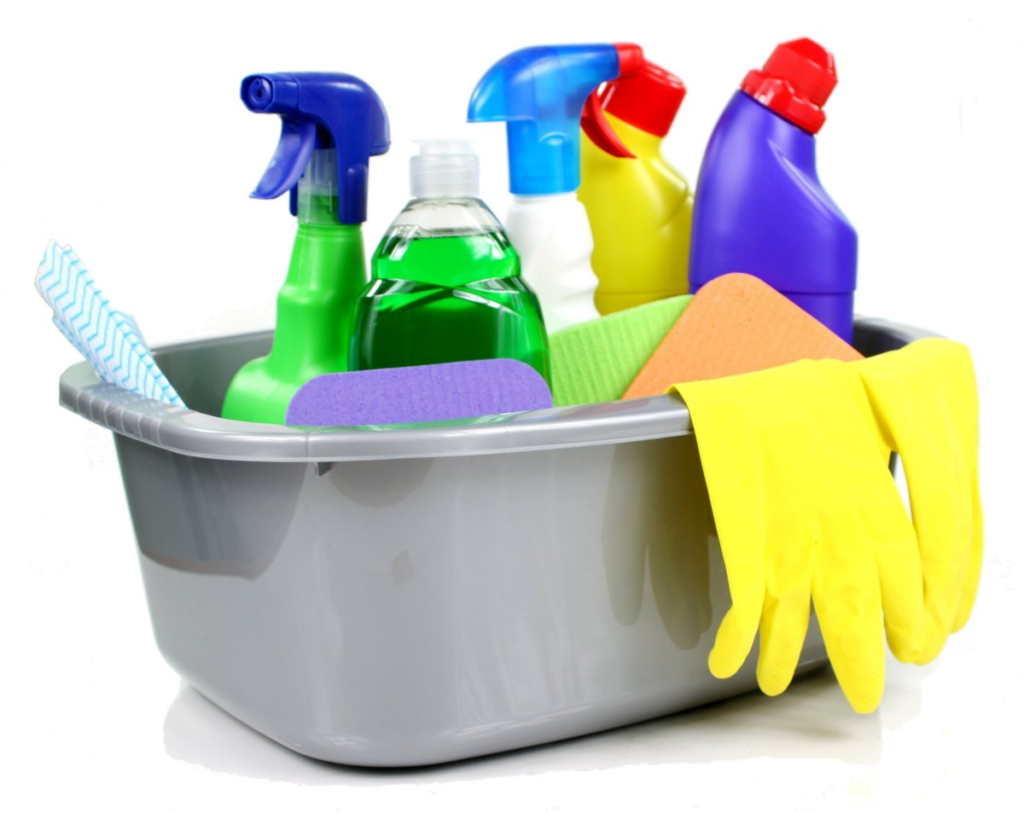
When can we use nontoxic natural cleansers and disinfectants such as baking soda and peroxide–and when do we actually need something stronger?
Can we get our cleaning agents in eco-friendly formats such as pellets to be dissolved in water, rather than harmful ones such as aerosol cans?
What are the most ergonomic ways to clean that protect our hands, shoulders, and backs from injury?
How do we most effectively train cleaning personnel to understand health, environmental, and safety issues?
Lynn Margulis,2005. Photo by Javier Pedreira, Creative Commons license.
I love this quote from biologist (and Carl Sagan’s wife) Lynn Margulis and her son Dorion Sagan: “Life did not take over the globe by combat, but by networking.”
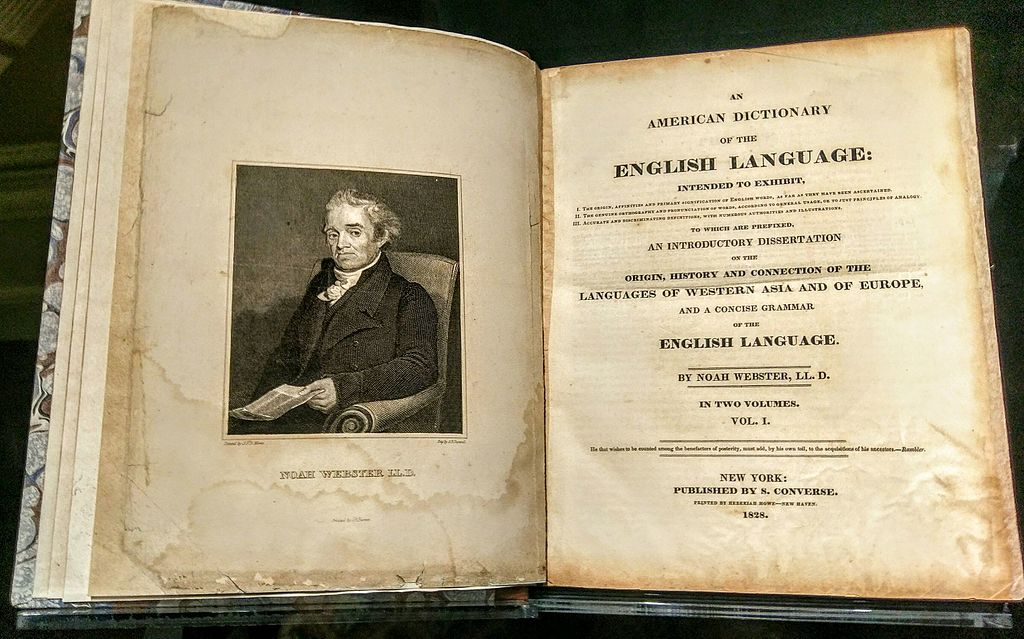
Noah Webster dictionary frontispiece and title page, 1828
Now that more than half a year since Merriam-Webster (as in Webster’s dictionary) released this list of its most searched words for 2019, I thought it might be fun to revisit it. I wrote most of this in response to a reporter query last December on what this list says about our society. The parts in italics are written in July, 2020, with the benefit of hindsight.
THEY: The Word of the Year is enormous recognition for the rapidly growing nonbinary community. I too have a child who now uses they/them/their, and so do many of their friends. This is a choice I might have made for myself in my 20s (and might still make in the future). A friend remarked to me recently that our generation (I’m turning 63 next week)(that was in December; next December will be my “Paul McCartney birthday”) worked to eliminate gender roles, while Millennials work to eliminate the concept of gender itself.
QUID PRO QUO: Asking for a favor in return for another favor. The search popularity of this phrase indicates that people want to understand what’s really true. For a public figure to be caught flat-out asking the president of another country, using the language, “a favor,” and then claiming there is no quid pro quo makes people wonder what this public figure has to gain from such an obvious lie–and what does it mean for a president to call on a foreign power to investigate his likely opponent. It also brings up questions about why foreign policy is being weaponized for personal political gain, threatening to deny already-approved aid an ally that is under attack by a neighboring superpower. We have an administration that tries to weaponize just about anything, refuses to work with Democrats in any meaningful way, and has spent the entire first half of 2020 sewing division and stupidity in everything from how to contain a virus pandemic to how to treat immigrants and refugees.
IMPEACH: Since this [impeachment of a president] was only used three times previously since the founding of the Republic, voters–especially those age 35 and under who probably don’t remember the last time–want to know exactly what it means, when it may be invoked, what the consequences are, and perhaps what the Founders had in mind when they wrote it into the Constitution. The high level of interest shows that we are not nearly as apathetic and apolitical as the media would portray us. Andrew Johnson and Bill Clinton were impeached, as was the current president; Richard Nixon resigned under threat of impeachment. What we’ve proven in 2020 is that there is, unfortunately, no requirement that the Senate discharge its duties properly. With minds already made up for acquittal, Senate Republicans other than Mitt Romney refused to hear evidence or call willing witnesses and ignored the copious violations of law, ethics, and the Constitution by the most corrupt and least qualified person ever to hold the office. I hope many of these Senators are defeated in November.
CRAWDAD is a bit of an outlier in that it has nothing to do with politics. It does show that even in our device-oriented world, a book can still make an impact on the way we talk, and that English is such a rich language in part because it borrows so liberally from other tongues.
EGREGIOUS: Although the Merriam-Webster (M-W) example cited is about the Boeing 737 Max scandal, a lot of this word’s popularity also has to do with the political situation. Searching “egregious trump” brings up 2,470,000 hits on Google, while “egregious boeing max” returns only 178,000.
CLEMENCY: Essentially a form of pardon. This year’s use of the word is particularly interesting because the Tennessee case cited on M-W’s page of a woman who murdered her abuser being granted clemency contrasts so sharply with the recent Kentucky governor’s grant of clemency for more than 400 felons on his last day in office, including one convicted of child rape and another whose murder victim was beheaded and stuffed into an oil drum–and another whose family held a campaign fundraiser for that governor.
THE is an example that craziness can gain entry to the list. Adding the word “the” to an official university name is just a marketing stunt that should have been ignored. But it does revisit many interesting issues about rebranding, going back at least as far as 1972, when Standard Oil’s US division gave up the warm and cuddly Esso for the cold, corporate Exxon, but the Canadian branch kept Esso.
SNITTY is an apt description for much of what passes for public discourse these days, including on social media. While I’m not personally a fan of Barr, I enjoyed his use of this term as cited on M-W’s page.
TERGIVERSATION is new to me. George Will actually apologized for using such an obscure word in describing the hypocrisy of Senator Lindsey Graham, once a strong critic of Trump and now one of his staunchest defenders. It has been fascinating to see George Will, an apologist for Republican presidents back to the Nixon-Ford era, become ever-more-clear that this one is not fit for office. Even Fox News gave huge play to Will’s late-May call to remove not just Trump but his “congressional enablers.”
CAMP: Ahh, a relief from politics that might hearken back to they/them/their as nonbinary pronouns. This has been around in the gay subculture for decades; I encountered it in the early 1970s. As conservatives try to double down on “traditional” family structures, expressions of camp creep ever-more-frequently into the wider culture, and society as a whole is a lot more accepting of male fashionistas (as an example). If you want a wonderful example of how gay male camp can take a court-jester role and use humor to attack the current administration, watch a few Randy Rainbow videos. They’re great fun. A recent one, “Bunker Boy”, is one of my favorites, and also one of the recent ones. You can find many of them at this search results page.
EXCULPATE: Now we’re back to the heart of the matter: the question several of these words and phrase raise about corruption in the conduct of senior government officials. Mueller said the report did not exculpate, and the quid pro quo demand makes it clear that the behavior hasn’t changed, either. Of course people will want to know whether their president was exculpated, and what that means.
Taken as a totality, these words show a keen interest in the legal challenges to the Trump administration. When we note that justice and feminism were the top words of the administration’s first two years, and we look at the enormous growth in protest movements immediately following the 2016 election (engaging millions of people who had not been active before, or had not been active in decades) 2018 and 2019 elections as well as the surge in popularity of presidential candidates who would have been considered fringe-left not that long ago, we see that these lookup spikes tell an important story about a growing and powerful movement for deep social change. We see that despite a rightward, authoritarian trend in governments around the world, there’s a strong undercurrent for social justice, and that includes bringing a cruel and corrupt president to justice. And while the centrist Biden came away the winner in the Dems’ nomination process, he has shown himself far more willing than I would have expected to embrace many elements of the progressive agenda, and to build real coalitions with progressive leaders including Bernie Sanders and Elizabeth Warren.
Every year, bestselling author and social media visionary Chris Brogan challenges his huge reader base to come up with three words to provide focus for the coming year. This year, I decided to take the challenge for the first time since 2016. And this time, I’m going to emblazon them on a printout in huge type, and post it where I can see my words every day. My three words are:
Clarity
Justice
Healing
Clarity
I’ll discuss Justice in Part 2 (with lots of links(), and Healing–including a deeply personal experience that happened to me this month–in Part 3.eye chart reminds me of having clarity in this year of 20//20 Clarity, 2020 AD
The year 2020 reminds me of 20/20 vision: seeing with perfect clarity. While I don’t expect to achieve perfect clarity, even with the new glasses I’ve just been prescribed ;-), I do want to focus on seeing and acting as clearly as possible.
It’s been several years since I changed the focus of my business toward helping other businesses (and other types of organizations such as nonprofits) find the sweet spot where profitability intersects with environmental and social good.
I now market myself as the person who can help any organization discover opportunities to do go in the world by creating, identifying and re-purposing, and/or marketing profitable products and services that turn hunger and poverty into abundance, war into peace, and catastrophic climate change into planetary balance.
I’ve gotten a lot clearer in my messaging since starting this quest in the summer of 2013, since giving my TEDx talk in 2014, and even since publishing my 10th book, Guerrilla Marketing to Heal the World, in 2016 (which Chris Brogan endorsed, along with Seth Godin, Jack Canfield, and many others).
But I’m still nowhere near as clear as I need to be about:
Who wants to pay me to do this work?
Which services they most want, and to achieve what goals?
How to set a price structure that’s fair both to solopreneurs and large corporations?
Who do I most want to serve?
I’m beginning to figure out the answers. I’ve settled on pricing based on the size of the organization, which seems reasonably fair because larger organizations are more complex and therefore a task such as a marketing plan our outlining a product development campaign will take a lot more of my time–but I’m not sure I’ve got all the bugs worked out yet. I’ve realized that I’d rather work with small entities than large ones, but I am very open to being farmed out by a larger entity to their smaller customers, suppliers, or business units–and to the larger entities sponsoring me in other ways, such as funding my speaking to organizations that can’t otherwise afford me.
Hopefully, seeing that message of clarity on the wall of my workspace every day will inspire me to figure all this out, and to make my message so clear that everyone understands exactly how I can help and why it’s important.
I’ll discuss Justice in Part 2 (with lots of links), and Healing–including a deeply personal experience that happened to me this month–in Part 3.
Concern for the planet—and the living things that ride “Spaceship Earth”—is good for business
One of my goals is to spring the message about regenerative, profitable business more widely. So I’m reaching out to other publications, and not just publishing on my own blog.
When I do something worth sharing here, I’ll post the link—as I’m doing here.
After the Business Roundtable, consisting of most of the US’s most powerful corporation heads, finally rejected the tired old bottom-line-is everything mentality last month, I pitched an article to GreenBiz.com on what that means for green and social change businesses. You can read it at https://www.greenbiz.com/article/how-business-roundtables-big-green-shift-creates-opportunity