Part 3: Inside the Armories

Part 3 of a series of reminiscences of the April 30/May 1, 1977 occupation at the Seabrook, NH nuclear power plant construction site, and its aftermath. If you missed Part 1, read it hereAt the bottom of that page, you’ll find a link to Part 2, and at the bottom of Part 2, a link back here.

In Manchester at least, we were all held in one big room. Each affinity group had an area, and we kept our own areas clean. All the poles that held up the ceiling were numbered, so we had an easy system to identify our locations within the large floor.

Small-to-Large-Group Consensus Decisions

Have you ever tried to get even 70 people to agree on anything? Even with 700 people in the Manchester Armory, we maintained a commitment to consensus; we did not move forward organizationally until everyone was OK with the decision. That didn’t mean everyone was in total agreement, but it did mean that the people who preferred another choice were OK with going forward after their concerns were heard. We had numerous decision-making meetings about strategy, about the roles of our support people on the outside, and about how we were being presented to the world. And consistently, we were able to reach rapid consensus.

How? By using hubs and spokes on top of the affinity group structure: Each affinity group selected a spokesperson to represent our views to a circle of spokespeople. The representative was not empowered to make decisions on our behalf, but to express our views and bring the views of other groups back to the affinity hubs to discuss whatever issues those other groups’ spokespeople had brought up.

Over and over, this structure, which sounds cumbersome and slow from a distance, proved to work well and work quickly. We settled even the most complex decisions through consensus, and that consensus was always achieved within two hours or less—sometimes just a few minutes. And because every issue or concern was explored, and we only implemented after no one was blocking, the decisions we reached carried weight and took root smoothly and rapidly; no one was trying to sabotage them, because we all felt ownership of the process.

Creating a Learning Community

Another exciting piece was the way we took advantage of our time together in a confined empty space to teach and learn from each other. You could call it “University Within Walls.”

Detainees offered a myriad of workshops around energy issues, green living/self-sufficiency, creating inclusive and active communities, environmental justice, and social change. All of us had expertise in something, and many were willing to share their knowledge. Some of the offerings, as I remember them:

  • Nonviolence theory and practice
  • Understanding the mechanics of—and problems with—nuclear power
  • Building quick, cheap and easy do-it-yourself alternative energy projects
  • Organic food production and preparation
  • Organizing and fundraising skills
  • How to get media coverage
  • Strategy of social change
  • Meeting facilitation that works

Workshop leaders would put up notices or announce sessions at meetings, including the nearest pole number.

From what I could see, it looked like nearly all the detainees were taking advantage of this opportunity, so almost all of us emerged from our incarceration with more knowledge and better skills. And from what I heard afterward, similar education was happening in the other armories. This is probably one reason why so many Clamshell Alliance folks have remained involved in social change all these decades later.

Reaching Past the Choir

A few days into our incarceration, some of us started realizing that we had a captive audience for our message: the young National Guard reservists called up to ensure security and order. Since we were all trained in nonviolence and a pretty orderly group—other than two detainees who sneaked out, made a run to the nearest Haagen Dazs, and were re-arrested bringing back ice cream to share—they didn’t have a lot to do.
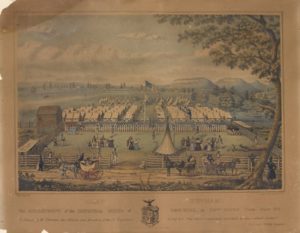
Unlike these National guardsmen of 1852, our primitive accommodations inside the armories included indoor plumbing. Picture credit: New York Public Library Digital Collections
Unlike these National Guardsmen of 1852, our primitive accommodations inside the armories included indoor plumbing. Picture credit: New York Public Library Digital Collections

So a lot of us started hanging out with the Guardsmen (I don’t remember any women in uniform) and chatting them up. We asked some questions about what being in the Guard was like, what they liked to do in their spare time—and what they knew and felt about nuclear power and our protest.

Clamshell was deep in the counterculture, with new ways to make decisions, a willingness to challenge any authority, and the scruffy hippie look of 1970s activism. Yet, among this very non-counterculture audience, we found most of them open to talking, and some of them open to changing their positions. As Rolling Stone described it back then, “But the prisoners hung on, politicizing their jailers, the guardsmen, whom they treated as friends.

For me, that was the only the second time I’d reached across to people I saw as “on the other side.” The first was at a peace demonstration at Wright-Patterson Air Force Base in Ohio, a couple of years earlier. It had felt like a revolutionary act, humanizing each other and finding places of commonality while defusing tension. Since then, it’s been a part of my social change toolkit.

Part 4 will look at what Clamshell and the Seabrook Occupation accomplished in the wider world, the ripples of impact we had that continue to this day.


Facebooktwitterpinterestlinkedinmail

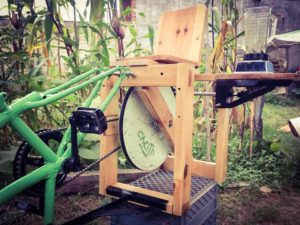
Stumbling across this article on bicycle-powered-everythings (bicimaquinas) in Guatemala—grain mills, water pumps, nut-shellers, blenders, and more—I’m reminded once again of the key question to ask if you want to spark innovation while keeping an eco-friendly focus on using fewer resources.

Too often, we focus on the tool: asking questions like “how do I get a new tractor?” But what is a tool? It’s a means of accomplishing a task! So the real focus should be on the task: “How can I get this done?” Asking “how can I get harvestable plants” might lead to plowing with draft animals—or to no-till farming techniques.

Green entrepreneurs (or frugal ones) refine that question. It morphs into “How can I accomplish this with the fewest resources?” Money and time are resources. So are raw materials, energy, water, plant seeds, animals, and so forth.

The people at Maya Pedal, the organization profiled in the bicimaquinaarticle, understood this. They looked around and realized there were a lot of junk bikes out there that could still do plenty of useful work, just not as transportation. They’ve come up with 19 different models so far.

Bicycle technology is cheap, accessible, understandable, and versatile. In fact, my latest book Guerrilla Marketing to Heal the World mentions a number of creative bike technology uses, even including a bike-powered trash hauling company. I also know of a fitness center that harnesses the energy of their bike-pumping clients to light the room.

We can ask this question in many situations—and it creates abundance. Asking “how can I power my electronic devices easily and cheaply without negative environmental consequences” might lead to developing something like the amazing Blue Freedom frisbee-sized hydroelectric plant (no dam required).

This blender is one of 19 different types of bicimaquinas—bike-powered equipment—developed by Maya Pedal in San Andrés Itzapa, Guatemala

Back when laser printers were retailing for $7000 and I had only a dot matrix, I asked myself how I could offer laser quality to my clients without spending that kind of money. That led me first to rent time on a nearby laser printer for a dollar a page, and later—when I spotted a remaindered model for $2500—to organize a co-op of four local business owners who chipped in $700 each to buy the printer and a sturdy stand for that very heavy machine. Since I organized the co-op, the printer lived in my office.

Amory Lovins, founder of Rocky Mountain Institute, asked himself how to build a really energy-efficient house  that could fund the energy improvements out of capital savings. All the way back in 1983, he built a near-net-zero-energy luxury home that didn’t need a furnace or an air conditioner (in the snowbelt outside Aspen, Colorado, where the biggest industry is skiing). I have a detailed study of Lovins’ work in Guerrilla Marketing to Heal the World, by the way—including the energy retrofit of the Empire State Building that saves $4.4 million per year in that building’s energy bills.

What’s the second question you might ask? How has nature already accomplished this task? But that’s an exploration for another time.

Thanks Heath Dannis, @dannis_heath for sharing the great story about bicimaquinas.

Facebooktwitterpinterestlinkedinmail

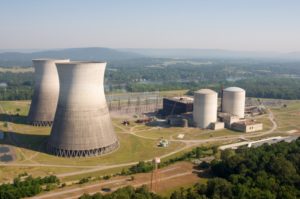
The Washington Post reports that the never-finished, never-operated Bellefonte Nuclear Power Plant, in Hollywood, Alabama is for sale at the bargain-basement price of $36.4 million. It has cost more than $5 billion to build as much of it as Tennessee Valley Authority managed to complete, so this isn’t just pennies on the dollar. Each penny of the purchase price leverages $137.36 of construction investment—which, if my math is right, works out to a pretty incredible 1,373,626.37 percent return on investment (ROI), if the plant could be amortized that way. Kind of like getting a Ferrari for the price of a Matchbox car (little toys about two inches long).

The unfinished Bellefonte nuke in Alabama is for sale. Let's have some fun figuring out what to do with it.
The unfinished Bellefonte nuke in Alabama is for sale. Let’s have some fun figuring out what to do with it.

Of course, the plant can’t be amortized that way. It was built to turn atoms into smaller atoms and electricity (and, by the way, tremendous waste heat and a whole soup of poisonous and radioactive waste). In all likelihood, the plant will never fulfill its intended purpose. And that’s a good thing!

So let’s think about what we could do with it instead. After all, it’s costing the small town of Westwood, MA more than $13 million just to build a police station, so this really is “the deal of the century.” And let’s have some fun.

I want your outlandish AND your practical ideas. Please submit one of each as a comment on this page, in this format: Outlandish: (describe your idea in one to three sentences). Practical: (describe your idea in one to three sentences). Also please tell me how you learned about the contest so I know whom to thank. If you wish, you may link to a page giving more details. Each entry must include both categories (and the link to your posting address or Facebook screen name must function, so I can contact you if you win).

Oh, and comments are moderated, so don’t even bother posting racist, sexist crap or unrelated commercial spam. It won’t get posted and it WILL get you reported and blacklisted.

All entries must be received by 11:59 PM Eastern Time, Thursday, October 20, a bit over a month from the day I post this.

Want to be a winner? Make your Outlandish entry very humorous but not offensive. And make your  Practical entry eco-friendly and specific. For instance, it’s not enough to say “a renewable energy project.” I want to know the type and why it’ll work there.

The winner in each category will get a 30-minute consultation with me to discuss any aspect of marketing, green/social entrepreneurship business profitability, book publishing, or green living–and a copy of my latest book, Guerrilla Marketing to Heal the World (acclaimed by Jack Canfield, Seth Godin, and others) as well as my ebook, Painless Green: 111 Tips to Help the Environment, Lower Your Carbon Footprint, Cut Your Budget, and Improve Your Quality of Life—With No Negative Impact on Your Lifestyle. Total value of the prize is $135, which is as close as I can come to the amount of construction cost each penny covers. And you’ll be in a press release I’ll send out announcing the winners.

I am the judge, and I’m not responsible for lost or misdirected entries, I assume no liability, blah blah blah (standard contest disclaimers).

Facebooktwitterpinterestlinkedinmail

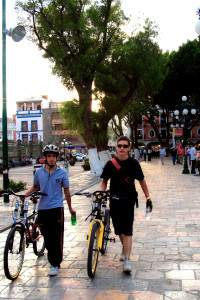
Urban bicyclists taking a break

What surprised me about Seth Godin’s blog post today on cars vs bicycles was the way he based his pro-bike arguments in classic liberal altruism: protect the underdog, ensure the safety of the less powerful. This is even more remarkable because he lives in New York City, whre bikes have clear superiority over cars for many purposes. (His tounge-in-cheek pro-car arguments, on the other hand, were like the modern Republican Party: I have more power than you, so get out of my way.)

I’m a big believer in convincing by harnessing the reader/listener/viewer’s enlightened self-interest. So I’d rewrite his pro-bike list with these eight positive reasons:

  • In dense urban areas, you’ll get there much faster on a bike than in a car, for trips of up to five and maybe as much as seven miles, especially in rush hour
  • You can park within a few feet of your destination (in big cities, I often start looking for a parking space half a mile/one kilometer ahead, and sometimes don’t find a space until a mile/2KM on the other side)
  • In less populated areas, the bike provides a healthy, fun workout
  • You notice more on a bike: stores and restaurants to check out, architectural details, big scenic vista, some ripe and yummy fruit to pick on a wild raspberry vine, that gorgeous hawk soaring above you
  • You enjoy that wonderful feeling of being outside with the breeze and sun
  • Your carbon footprint during your trip is reduced by orders of magnitude
  • You get to smile and be smiled upon by other people; positive human connection, no matter how fleeting, is a good thing, and hard to achieve encased in a ton or two of steel and plastic
  • Bikes are waaay cheaper—bike economics: outright purchase of something between $200 for a decent used street bike on up to, say, $600 for a new one of better quality, maintenance costs of $50-$100 per year, fuel cost of zero; car economics: at minimum, $5000 plus hundreds or thousands in annual maintenance for a functional used car with a remaining lifespan of three years or more, plus costs of fuel and insurance, on up to several tens of thousands for a new one.

Of course, Seth is using the bike vs. car argument as a metaphor for the caring vs. selfish economy. But as an avid biker (going back to commuting to high school in New York City, and continuing through my current rural lifestyle)—and a benefit-focused marketer, I had to point out that bikes do actually offer a number of real advantages.

Facebooktwitterpinterestlinkedinmail

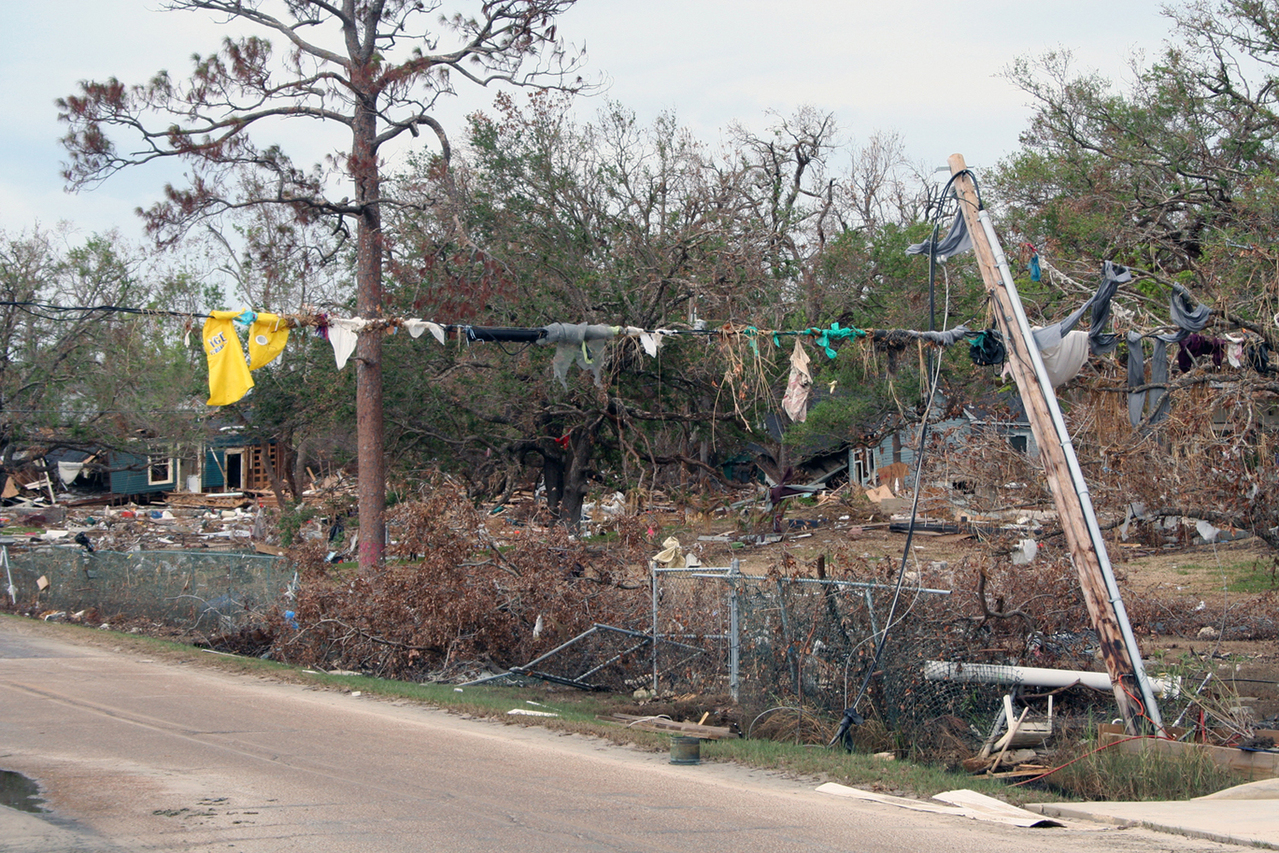
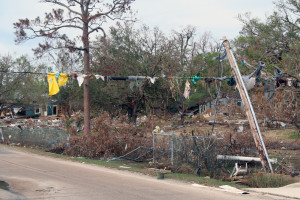
Aftermath of Hurricane Katrina. Photo by Palmer W. Cook
Photo of debris after Hurricane Katrina
Aftermath of Hurricane Katrina. Photo by Palmer W. Cook

It’s not often you hear a self-professed liberal Jewish feminist open her talk with ten minutes praising the Pope. But that’s how Naomi Klein, author of This Changes Everything, The Shock Doctrine, and several other groundbreaking books, began her talk at Mount Holyoke College last night. While acknowledging a litany of areas where she and Francis have profound disagreements—among them same-sex marriage and a woman’s right to control her own body—she thanked him publicly for his attention to the planet in peril and its dispossessed people, saying he was a great example of what environmental leadership looks like right now.

And for Klein, those two areas—helping the planet and replacing poverty with abundance—are forever braided together. “Climate change is an accelerant to all the other issues going wrong…It’s not about saying climate change is so big that it trumps everything else. All are equally urgent, and we don’t win by pitting these issues against each other.” We win, she says, by joining forces to demand holistic approaches that simultaneously solve climate heating, create jobs and economic opportunity, and remediate ism-based oppression—by “connecting climate change with a broken economic model”—a concept she calls “intersectionality.”

(This is a message particularly dear to my own heart, and thoroughly integrated into my forthcoming 10th book, Guerrilla Marketing to Heal the World as well as my own talk, “‘Impossible’ is a Dare.”)

The impacts of climate change, she notes, often fall most heavily among the very poor countries, and the very poor residents of rich countries. Oil refineries, coal plants, and high asthma rates tend to be found in low-income communities, often with high concentrations of people of color. Rising floodwaters will inundate poor, tiny island nations first. “It’s not just about things getting hotter, but about things getting meaner. More militarized, more racist,” as we see in the response of countries like Hungary to the Syrian refugee crisis. Which she sees as climate-related, noting that the Syrian civl war followed the worst drought in Syria’s history. Climate change, she says, is also a women’s and a feminist issue; the impacts hit women disproportionately as well.

So her challenge to climate activists is to turn “disaster apartheid” (e.g., the detestable official response to Hurricane Katrina) into “energy democracy.” And that includes making sure that the communities hit hardest are first in line for improvements that meet their needs.

Hurricane Katrina, which inspired Klein to write The Shock Doctrine and begin her climate study that led to This Changes Everything, was a perfect storm combining “heavy weather and a weak and neglected public sphere.” She points out that by the time Katrina made landfall, it had been downgraded from a Category 5 hurricane to a mere tropical storm. The levees should have withstood the onslaught, if they hadn’t been allowed to fall into disrepair.

While the world looked on with horror as “FEMA couldn’t find New Orleans,” and “prisoners were abandoned, locked in their cells as the waters were rising,” evacuees were given one-way tickets out, and the elites seized an opportunity to remake the city as a wealthier place, with 100,000 fewer poor blacks, even tearing down public housing projects undamaged by the storm, to replace them with high-end condominiums.

Quoting Black Lives Matter leader Alicia Garza, Klein says it’s time to “‘make new mistakes’…we can’t demand perfection but we can demand evolution.”

Examples of the old mistakes we shouldn’t keep making:

  • “Projecting messianic fantasies onto politicians” and becoming disappointed when they fail to save us
  • Believing we can solve all our problems with market forces (she cites the recent Volkswagen fuel emissions tampering scandal as an example of why that doesn’t work)—or with technological fixes, which include not only wonderful new green energy systems but also environmentally catastrophic technologies like fracking (“the oil companies have figured out how to screw us sideways”), tar-sands oil, and massive pipelines such as the Keystone XL
  • “Building a movement entirely of upper-middle-class white people and wondering why people of color don’t join”
  • “Tearing other people to shreds” in bouts of anger disguised as political purity
  • Thinking that any one of us can do it all ourselves

Noting that fossil fuel companies will work extremely hard to protect their enormous profits and will try to win the public by pointing out the lifestyles of luxury fossil fuels have allowed us, Klein says we won’t win by trying to educate fossil-fuel billionaires like the Koch brothers. Furthermore, “we cannot look at this without looking at who burned what, when. Fossil fuels have allowed us to live the fantasy of a life apart from nature. But the response from the earth, though slow in coming, says there’s no such thing as a one-way relationship, and you were never the boss! We could see this as a cosmic demotion—or as a gift.”

But we do have many victories to celebrate, including Shell’s decision this week in the face of strong opposition from environmentalists to withdraw from arctic drilling…China’s major reduction in coal development and initiation of carbon cap-and-trade—due to public pressure even in that repressive society—when only a few years ago a new coal plant was opening every week…the 400,000 new jobs Germany has created in shifting 30 percent of its energy from fossil and nuclear to solar and wind (to name a few). “As I talk to people, the biggest problem is that they think they can’t win. But we are winning, as part of a global movement.

And just as the shock of the Great Depression economic collapse created space for New Deal social reforms, so the climate catastrophe, coupled with the current collapse of fossil fuel prices, with the price of a barrel of oil plummeting from $100 to $50 in three months,  could catalyze transformation: “integrated holistic solutions and a road map. There’s a progressive tradition of using these shocks to build….a moment where we can do things that weren’t possible before. We can shut down bad projects and bad policy. We can win a moratorium on all arctic drilling. It’s easier to bring in a bold progressive carbon tax…the political goal has to be a polluter-pays principle…the mostr sustainable route is weaving together the yes and the no.” She delighted in recent progressive electoral victories in Alberta (long controlled by tar-sands-loving right-wingers) and in the UK, where the Bernie Sanders-like Jeremy Corbyn has just become head of the Labour Party. Also in Alberta, she took hope from a conference that brought together union miners from the tar sands, environmentalists, and many other sectors and emerged with a progressive manifesto.

Before a brief Q&A, she closed her formal presentation with a clarion call to optimism AND action:

We need to move from a society based on extraction to one based on caring, including a guaranteed annual income. Caregiving jobs are climate change jobs. We must expand the caring economy and contract the careless economy. 2016 is a leap year; we add a human-created day in deference to the earth’s rotation. That’s an increased opportunity to build a much better world. We will be told it’s impractical. But $2.6 trillion has been divested from fossil fuel.

Quoting a woman leader in Nauru, a tiny Pacific Island being lost to climate change after a catastrophic history of exploitation by First World economies (Klein chronicles the sad tale in This Changes Everything), she continued,

“If politics are immovable, let’s change the politics.” Now is not the time for small steps. Now is the time to leap!

Facebooktwitterpinterestlinkedinmail

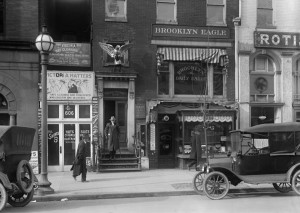
Office of the Brooklyn Daily Eagle, 1916
Office of the Brooklyn Daily Eagle, 1916. Source: https://en.wikipedia.org/wiki/File:Brooklyn_Daily_Eagle2.jpg

We have a kilowatt of solar electric on the roof of our 1743 colonial farmhouse. But a few years ago when the October Blizzard knocked out our power for three days, we couldn’t tap into that solar.

Officials in Brooklyn, New York recognized the problem. Brooklyn had a lot of power outages during Hurricane Sandy—and officials in the densely populated borough, home to more than 2.5 million people, have gotten state support to pilot a microgrid program that would allow Brooklyn’s solar systems to keep powering houses and workplaces if the grid goes down.

Facebooktwitterpinterestlinkedinmail

A sobering—but not at all surprising—story on the Associated Press wire this morning: the more we drill for oil, the more accidents we have.

Consider these stats, all of them taken from that article:

  • More than 2000 “significant accidents” on pipelines since 1995, causing $3 billion in property damage
  • A single pipeline company, Plains All American Pipeline LP (operators of the line that spilled over Santa Barbara, California this week) has had 223 accidents $32 million in structural damage, 864,300 gallons spilled, and 25 federal enforcement actions just since 2006
  • A 60 percent increase in the number of accidents annually since 2009—and, not coincidentally, also a 60 percent increase in US oil production

Causes? Corroding pipes, failures in welds—aging infrastructure, in other words—with a generous helping of natural disasters and careless backhoe operators.

These accidents leak toxics, cause a  risk of severe fires, and of course, drive up the price of energy.

Isn’t it time we stopped relying on fossil and nuclear for our energy needs? We already have the technology to switch to save, reliable, renewable sources such as solar, wind, geothermal, magnetic, tidal…and deep conservation, which just by itself could cut our energy use in half.

Facebooktwitterpinterestlinkedinmail

A couple of Facebook friends (both well-known marketers based in Canada, as it happens) posted a link to an article called “FDA to Crack Down on Home-based Soap Makers.”

Having seen government overreach in such areas as raw milk, I clicked over and took a look. And found very little information. Rather than spend my morning following links on a Google search, I merely posted this response:

But the article says very little about what the proposal actually would do. European cosmetics standards are a GOOD thing, and, as I understand them, would make it far harder for big corps to sell us harmful “personal care” products. Which doesn’t mean this law isn’t overreaching–just that I don’t know because the article doesn’t tell us. Seems like an easy way around this would be a minimum number of bars per year underneath which producers would be exempt. But even artisanal soapmakers *should* disclose ingredients.

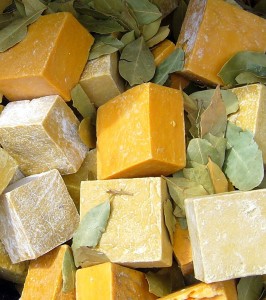
Artisanal organic soap bars
Would small-batch organic soaps be affected? No.

Later, I saw another comment from someone who did take the time to do the research; businesses with less than $100,000 in sales are exempt.

In short, this article is an attempt to stir up hostility with a nonexistent controversy. And it seems that Senator Dianne Feinstein is not an evil tool of the personal care companies after all.

I wonder, if we dig deep enough, if we would find some of the big chemical-based personal care products companies—or perhaps an opponent of Senator Feinstein—have a hand in this disinformation campaign. The list of industry giants supporting the new legislation (and thus, imposing tougher standards for themselves) is a long one but it’s certainly not every company.

Incidentally, I’ve said for years that the tough European Union rules on personal care products were a huge marketing opportunity for companies that meet the standards. Whether based in the US or Europe, the first few companies that demonstrate they meet the tougher standards ought to go be very successful in the stores.

Facebooktwitterpinterestlinkedinmail

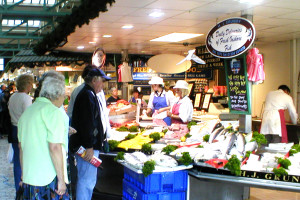
Value is about not just price, but quality. This busy market obviously understands.
If you want to market on price, look at words like “affordable” and “value.” “Cheap” can be deadly.

As a service provider, I did lead on price for a number of years. Back in the days when much of my business was resume writing, I used a simple half-inch in-column ad in the Yellow Pages (remember them?) with the slogan “Affordable professional resumes while you wait.” The year they changed it without permission to “Affordable professional resumes while U wait,” I successfully argued that proper grammar was a key selling point in my line of work and they killed it—and got the cost of the whole year’s ad refunded. I turned out to be wrong; that ad brought me plenty of clients. But I personally would not patronize a writing service whose face to the world was ungrammatical.

Those ads ran in the 1980s and 1990s, and resume writing is only a tiny fraction of my current business. These days, I stress value, not price–for all the services I offer. Some are still quite inexpensive, like writing a press release or book cover—or, for that matter, the occasional resume I still write. Others, including strategic consulting on green and social change profitability as well as book publishing consulting, can be fairly pricy.

I would have moved away from marketing on low price anyway, as my business matured. But if I hadn’t, my business would have dried up. The market is very different now. Nobody is a prisoner of their own geography any more. I can’t compete on price with some clown on a bottom-feeding service bidding site who throws an article into a word-blender and spits out crap for $5 a shot. But I sure can compete on value and quality.

As a consumer, I’m price-sensitive on some items, but quality will trump price, and so will politics. Yesterday, I spent $40 or $50 at the farmers market. I could have bought the (theoretically) same items at a supermarket for half the price, but not the organic/local/fresh choices I purchased. But I also stopped at the local independent discount store and picked up some just-past-date polenta for a buck. I cooked it last night and it was fine. I have a less gourmet one in my fridge that I paid $3 for at a different store and it doesn’t expire until November, which means the one I ate tonight was probably packed last summer. But that’s OK, it was fine.

I learned all the way back in the 1980s that price and value were not necessarily the same. After a couple of bad experiences with cheap electronics, I started buying better quality components for my stereo, better telephones, and so forth—and being much happier with my purchases. I learned that I could get a good deal through a remainder catalog, and that a $100 item with an original list price of $300 was generally going to be a much better value than a $75 item that had never sold for more than $100. And when I bought my first computer, I went with the expensive but easy-to-use Macintosh and was very happy I did.

I will shop at that local discount store, but I won’t shop at that very famous low-price big box store beginning with a W. While I recognize that they are among the best in the industry on sustainability (something very important to me), I’m also painfully aware of how much I dislike their store siting and closing policies, their community relations, labor practices, supplier practices, and a bunch of other stuff. Plus, I’ve heard that the quality is often less than stellar. I give them kudos in my speeches for, among other things, developing a massive market for organic foods among people who have never been inside a Whole Foods. But I personally choose not to shop there.

But I’m perfectly happy to drive inexpensive, functional cars. Right now, we have a 2004 Mazda, bought new for $17K, and a 2005 Toyota Corolla, bought at six years old but with only 26,000 miles on it, for $10K. I expect both to last several more years. When we bought the Corolla, one of our other options was a used Prius with 99,000 miles, for $12K. The Corolla seemed like a MUCH better deal. It wasn’t the lower price so much as having only 1/4 as many miles.

In short, as a consumer, I’ll definitely factor in price, but it won’t be the only factor. How about you? As a business owner and as a consumer, how does price factor into your decisions.

Facebooktwitterpinterestlinkedinmail

Maybe my family’s organic garden (and my neighborhood) is a microcosm of the changes in the world ;-). We normally stop getting zucchini by the end of July. Last year, it went halfway through August. And this year, the one surviving plant finally died today, and I harvested the last two very tiny zukes on October 7. The season was approximately five weeks longer than usual,even though hey like hot weather and we pretty much didn’t have any.

Tomatoes, on the other hand, are normally extremely prolific until the first killing frost, usually very late in October. This year, the season peaked in early August, and even at its peak, we had far fewer than usual. I did manage to put a few pints of sauce in the freezer, and a few jars of dried tomatoes in the pantry, but the abundance that normally covers our entire counter never materialized—and the tomatoes had pretty much gone away by September 1, producing only one or two not-so-big tomatoes (many of them bloghted) and a handful of cherry tomatoes every few days since then. Normally, our six plants produce two or three dozen every day this time of year.

Our berry bushes were odd this year, too. The one blueberry plant gave one to two pints a day for about ten days, but one of our raspberry plants produced next to nothing, and the other a fairly paltry amount. On the very best day,I got half a pint. Ditto our blackberry bush. Normally,I’m able to put several pints by. This year, I managed to gather together and freeze a single half-pint of mixed blackberries and raspberries in July; we ate the rest as it came in, and it wasn’t much. But the bigger raspberry plant actually produced about eight very tasty fruits in September, a time when we’ve never gotten berries from it before.

Our celery was severely stunted, only about six inches high and mostly leaves, on very thin stalks. In the past, we’ve had celery that looked as good as supermarket varieties. We grew potatoes for the first time, and they came out great.

Nobody cultivates them, but I like to go gather Russian olives this time of year. I went to one of the two groves I know and found a total of one berry from several dozen plants. Fortunately, I know another grove, which was its usual prolific self.

Farmer neighbors who grow winter squash did not get a crop this year. Neither did several of the local apple farmers.

In short, not-normal is the new normal in the garden. Do you think, just maybe, global climate change has something to do with it?

Facebooktwitterpinterestlinkedinmail