What surprised me about Seth Godin’s blog post today on cars vs bicycles was the way he based his pro-bike arguments in classic liberal altruism: protect the underdog, ensure the safety of the less powerful. This is even more remarkable because he lives in New York City, whre bikes have clear superiority over cars for many purposes. (His tounge-in-cheek pro-car arguments, on the other hand, were like the modern Republican Party: I have more power than you, so get out of my way.)
I’m a big believer in convincing by harnessing the reader/listener/viewer’s enlightened self-interest. So I’d rewrite his pro-bike list with these eight positive reasons:
In dense urban areas, you’ll get there much faster on a bike than in a car, for trips of up to five and maybe as much as seven miles, especially in rush hour
You can park within a few feet of your destination (in big cities, I often start looking for a parking space half a mile/one kilometer ahead, and sometimes don’t find a space until a mile/2KM on the other side)
In less populated areas, the bike provides a healthy, fun workout
You notice more on a bike: stores and restaurants to check out, architectural details, big scenic vista, some ripe and yummy fruit to pick on a wild raspberry vine, that gorgeous hawk soaring above you
You enjoy that wonderful feeling of being outside with the breeze and sun
Your carbon footprint during your trip is reduced by orders of magnitude
You get to smile and be smiled upon by other people; positive human connection, no matter how fleeting, is a good thing, and hard to achieve encased in a ton or two of steel and plastic
Bikes are waaay cheaper—bike economics: outright purchase of something between $200 for a decent used street bike on up to, say, $600 for a new one of better quality, maintenance costs of $50-$100 per year, fuel cost of zero; car economics: at minimum, $5000 plus hundreds or thousands in annual maintenance for a functional used car with a remaining lifespan of three years or more, plus costs of fuel and insurance, on up to several tens of thousands for a new one.
Of course, Seth is using the bike vs. car argument as a metaphor for the caring vs. selfish economy. But as an avid biker (going back to commuting to high school in New York City, and continuing through my current rural lifestyle)—and a benefit-focused marketer, I had to point out that bikes do actually offer a number of real advantages.
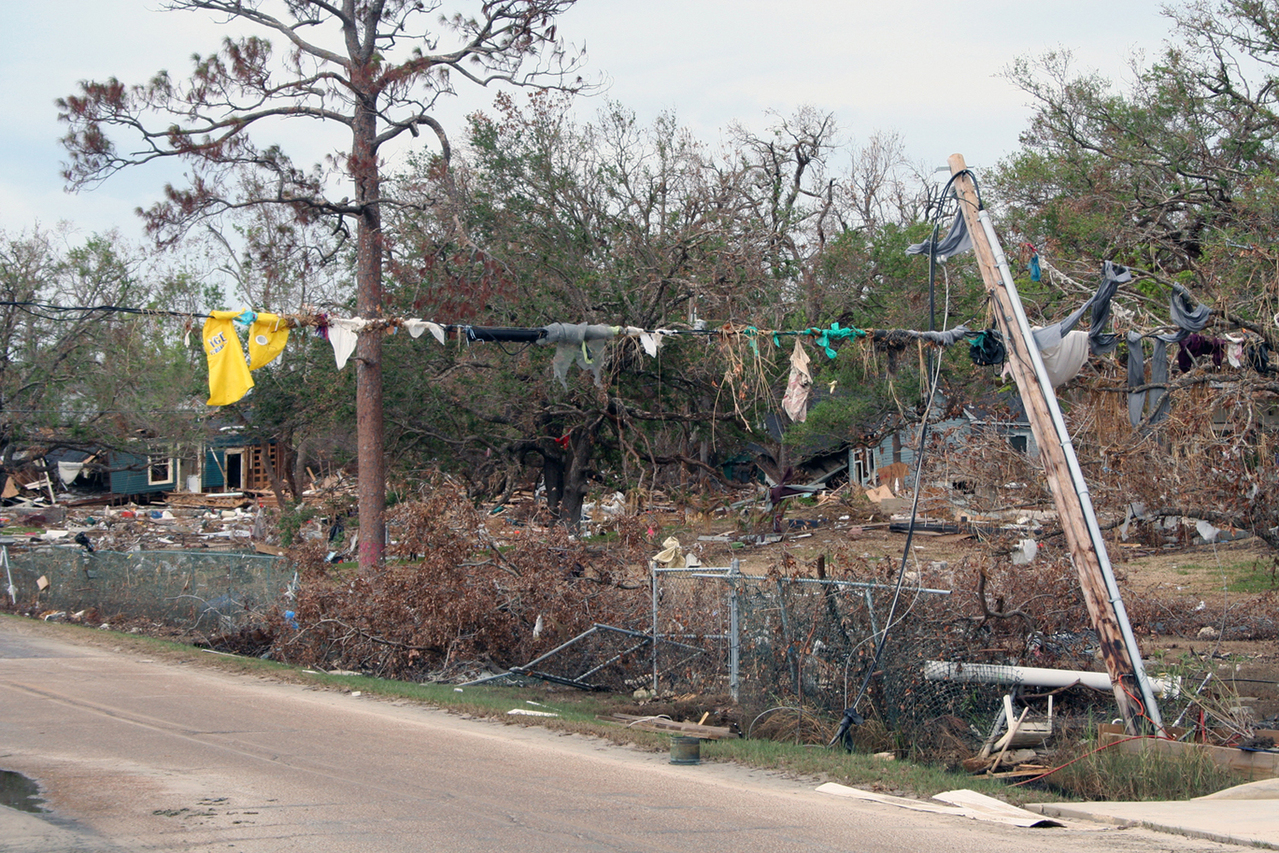
Aftermath of Hurricane Katrina. Photo by Palmer W. Cook
Aftermath of Hurricane Katrina. Photo by Palmer W. Cook
It’s not often you hear a self-professed liberal Jewish feminist open her talk with ten minutes praising the Pope. But that’s how Naomi Klein, author of This Changes Everything, The Shock Doctrine, and several other groundbreaking books, began her talk at Mount Holyoke College last night. While acknowledging a litany of areas where she and Francis have profound disagreements—among them same-sex marriage and a woman’s right to control her own body—she thanked him publicly for his attention to the planet in peril and its dispossessed people, saying he was a great example of what environmental leadership looks like right now.
And for Klein, those two areas—helping the planet and replacing poverty with abundance—are forever braided together. “Climate change is an accelerant to all the other issues going wrong…It’s not about saying climate change is so big that it trumps everything else. All are equally urgent, and we don’t win by pitting these issues against each other.” We win, she says, by joining forces to demand holistic approaches that simultaneously solve climate heating, create jobs and economic opportunity, and remediate ism-based oppression—by “connecting climate change with a broken economic model”—a concept she calls “intersectionality.”
(This is a message particularly dear to my own heart, and thoroughly integrated into my forthcoming 10th book, Guerrilla Marketing to Heal the World as well as my own talk, “‘Impossible’ is a Dare.”)
The impacts of climate change, she notes, often fall most heavily among the very poor countries, and the very poor residents of rich countries. Oil refineries, coal plants, and high asthma rates tend to be found in low-income communities, often with high concentrations of people of color. Rising floodwaters will inundate poor, tiny island nations first. “It’s not just about things getting hotter, but about things getting meaner. More militarized, more racist,” as we see in the response of countries like Hungary to the Syrian refugee crisis. Which she sees as climate-related, noting that the Syrian civl war followed the worst drought in Syria’s history. Climate change, she says, is also a women’s and a feminist issue; the impacts hit women disproportionately as well.
So her challenge to climate activists is to turn “disaster apartheid” (e.g., the detestable official response to Hurricane Katrina) into “energy democracy.” And that includes making sure that the communities hit hardest are first in line for improvements that meet their needs.
Hurricane Katrina, which inspired Klein to write The Shock Doctrine and begin her climate study that led to This Changes Everything, was a perfect storm combining “heavy weather and a weak and neglected public sphere.” She points out that by the time Katrina made landfall, it had been downgraded from a Category 5 hurricane to a mere tropical storm. The levees should have withstood the onslaught, if they hadn’t been allowed to fall into disrepair.
While the world looked on with horror as “FEMA couldn’t find New Orleans,” and “prisoners were abandoned, locked in their cells as the waters were rising,” evacuees were given one-way tickets out, and the elites seized an opportunity to remake the city as a wealthier place, with 100,000 fewer poor blacks, even tearing down public housing projects undamaged by the storm, to replace them with high-end condominiums.
Quoting Black Lives Matter leader Alicia Garza, Klein says it’s time to “‘make new mistakes’…we can’t demand perfection but we can demand evolution.”
Examples of the old mistakes we shouldn’t keep making:
“Projecting messianic fantasies onto politicians” and becoming disappointed when they fail to save us
Believing we can solve all our problems with market forces (she cites the recent Volkswagen fuel emissions tampering scandal as an example of why that doesn’t work)—or with technological fixes, which include not only wonderful new green energy systems but also environmentally catastrophic technologies like fracking (“the oil companies have figured out how to screw us sideways”), tar-sands oil, and massive pipelines such as the Keystone XL
“Building a movement entirely of upper-middle-class white people and wondering why people of color don’t join”
“Tearing other people to shreds” in bouts of anger disguised as political purity
Thinking that any one of us can do it all ourselves
Noting that fossil fuel companies will work extremely hard to protect their enormous profits and will try to win the public by pointing out the lifestyles of luxury fossil fuels have allowed us, Klein says we won’t win by trying to educate fossil-fuel billionaires like the Koch brothers. Furthermore, “we cannot look at this without looking at who burned what, when. Fossil fuels have allowed us to live the fantasy of a life apart from nature. But the response from the earth, though slow in coming, says there’s no such thing as a one-way relationship, and you were never the boss! We could see this as a cosmic demotion—or as a gift.”
But we do have many victories to celebrate, including Shell’s decision this week in the face of strong opposition from environmentalists to withdraw from arctic drilling…China’s major reduction in coal development and initiation of carbon cap-and-trade—due to public pressure even in that repressive society—when only a few years ago a new coal plant was opening every week…the 400,000 new jobs Germany has created in shifting 30 percent of its energy from fossil and nuclear to solar and wind (to name a few). “As I talk to people, the biggest problem is that they think they can’t win. But we are winning, as part of a global movement.
And just as the shock of the Great Depression economic collapse created space for New Deal social reforms, so the climate catastrophe, coupled with the current collapse of fossil fuel prices, with the price of a barrel of oil plummeting from $100 to $50 in three months, could catalyze transformation: “integrated holistic solutions and a road map. There’s a progressive tradition of using these shocks to build….a moment where we can do things that weren’t possible before. We can shut down bad projects and bad policy. We can win a moratorium on all arctic drilling. It’s easier to bring in a bold progressive carbon tax…the political goal has to be a polluter-pays principle…the mostr sustainable route is weaving together the yes and the no.” She delighted in recent progressive electoral victories in Alberta (long controlled by tar-sands-loving right-wingers) and in the UK, where the Bernie Sanders-like Jeremy Corbyn has just become head of the Labour Party. Also in Alberta, she took hope from a conference that brought together union miners from the tar sands, environmentalists, and many other sectors and emerged with a progressive manifesto.
Before a brief Q&A, she closed her formal presentation with a clarion call to optimism AND action:
We need to move from a society based on extraction to one based on caring, including a guaranteed annual income. Caregiving jobs are climate change jobs. We must expand the caring economy and contract the careless economy. 2016 is a leap year; we add a human-created day in deference to the earth’s rotation. That’s an increased opportunity to build a much better world. We will be told it’s impractical. But $2.6 trillion has been divested from fossil fuel.
Quoting a woman leader in Nauru, a tiny Pacific Island being lost to climate change after a catastrophic history of exploitation by First World economies (Klein chronicles the sad tale in This Changes Everything), she continued,
“If politics are immovable, let’s change the politics.” Now is not the time for small steps. Now is the time to leap!
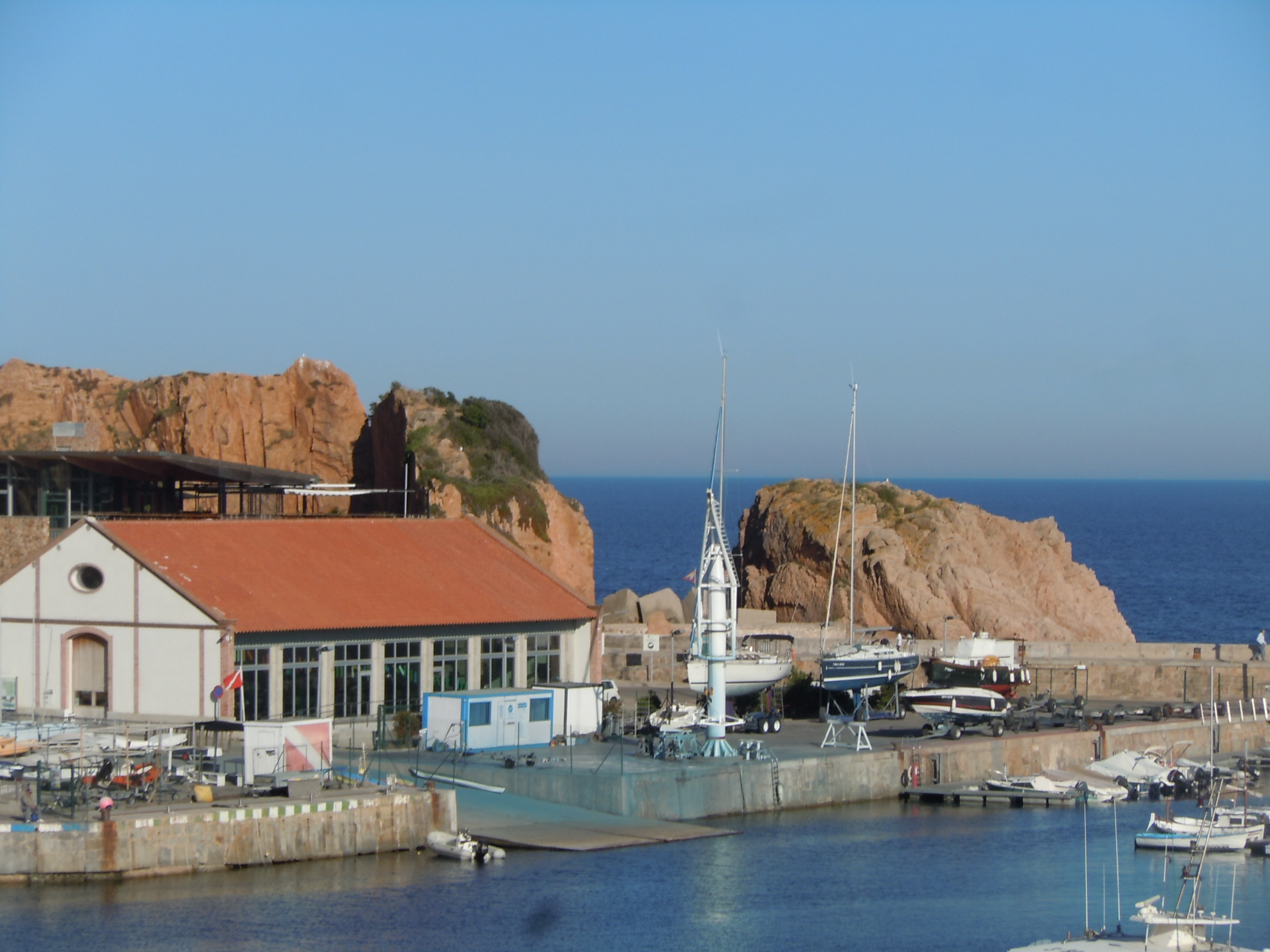
Independent-owned boats like these on the Spanish Costa Brava could be forced out by Big Fish. Photo by Shel Horowitz
Independent-owned boats like these on the Spanish Costa Brava could be forced out by Big Fishing. Photo by Shel HorowitzAs a vegetarian for the past 42 years, I don’t spend a lot of time thinking about fish. But I went to a talk, “Food Grabs vs. Climate Justice: How capitalists and climate deniers are locking up access to land and sea, and how Food Sovereignty movements are creating real climate solutions,” part of the Center for Popular Economics’ annual summer institute in Western Massachusetts.
Moderated by Sara Mersha (Grassroots International), panelists included Michele Mesmain (Slow Food International), Betsy Garrold (Food for Maine’s Future), and Seth Macinko (Department of Marine Affairs, University of Rhode Island). Both Macinko and Mesmain focused on fish and fisheries.
Both experts agreed on the need to control overfishing–and both said there’s a better way than the current widely embraced privitization “solution”: taking the public resource of the sea held in common, and giving it, for free and in perpetuity, to large corporations who are already catching the most fish. These corporations then can lease fishing rights back to the local fisherfolks, who used to be able to fish them for free–or simply force them out of business.
Macinko said you can manage a resource to prevent overfishing without savaging the historic commons rights, and noted the unholy alliance of environmental groups (including Environmental Defense Fund), academics, corporate-oriented major foundations such as Pew, government and trans-government authorities including the World Bank, the Big Fishing lobby, and, lo and behold, the Koch Brothers’ foundation pushing for this rights grab. Then Mesmain showed three models of successful fisheries management without privitization: a 1000-year-old guild governing France’s Mediterranean coast, a much more recent initiative in the Basque region of Spain–both involving open-sea fisheries, and one through the Okanagan Nations Alliance (8 nations/tribes in Washington State and British Columbia) covering inland river salmon fisheries.
Like many environmentalists, I have serious issues with fracking: injecting a highly pressurized toxic sew of chemicals and water into shale rock, to blow it apart and release the gas trapped inside. This technology has spread widely in the last 15 years or so, and has been a lot of why fossil fuel prices have actually fallen.
In my mind, the big problem was always the risk to our water. We can live without oil, gas, coal and nuclear; there are plenty of alternatives. But we can’t live without clean, usable water, and fracking puts that at risk. There also seems to be a correlation between fracking and earthquakes, which should make anyone a bit nervous.
So why are we investing billions of dollars in infrastructure and putting our water at risk? Why not use that money to push our economy further toward renewables like solar, wind, and small hydro? Why not retrofit every building with deep-conservation insulation, thus reducing the demand?
No wonder people around the country and around the world–including my own area of Western Massachusetts, where a proposal to pipe fracked gas has encountered fierce opposition despite gas company dirty tricks that extend to imposing a moratorium on new gas connections
Ask your utility company these sorts of questions. It’s your right to know.
The last hundred years have also seen a similar ratchet (amplified, I’d argue, by the technology of media and of the economy) in civil rights. It’s unlikely (with the exception of despotic edicts) that women will ever lose the vote, that discrimination on race will return to apartheid-like levels, that marriage will return to being an exclusionary practice… once a social justice is embraced by a culture, it’s rarely abandoned.
Unfortunately, those “despotic edicts” are all-too-common. While the general trend is not to reverse progress, there are far too many exceptions:
Women’s rights in Iran under the Shah or Kabul pre-Taliban versus today
Rights of Jews, Gypsies, and LGB folks in prewar Germany vs. the Nazi years
The collapse of Sarajevo’s much-vaunted multiculturalism into massive racism and “ethnic cleansing” in the 1990s
Although this is a pessimistic post, I am ultimately an optimist. I think Godin is basically right–but there are many, many exceptions. Let’s work together for a world in which those exceptions are no longer tolerated–we can do this!
Remember the World Trade Organization, which slipped into the shadows after massive Seattle protests in 1999? The same day last week that Congress initially blocked the possibility of fast track approval for the TPP trade agreement, the House voted to overturn rules requiring country-of-origin labeling for meat. Those supporting the vote said they were responding to a World Trade Organization ruling, judging US country-of-origin labeling unfair competition with meat coming from foreign countries like Canada and Mexico, and therefore a violation. They said they had no choice for fear of triggering sanctions or lawsuits from countries exporting meat across our borders.
I don’t know about you, but I like knowing whether my meat comes from Iowa or Uzbekistan, Montana or Mexico, Kentucky or Kenya. So do 93% of Americans, according to a Consumer’s Union survey. People like supporting US farmers, cutting down distance travelled, knowing there will be at least minimal inspection standards, even if the delights of e coli occasionally slip through. It seems commonsensical that we’d want at least the chance to become informed consumers, whether with the origins of our meat, GMO-derived crops, or the amount of sugar and calories in our baked goods.
Maybe the House members are wrong in insisting that the international tribunals that adjudicate trade disputes would deem this a violation. But if this particular House bill passes the Senate and gets signed by Obama, even the mere possibility of a lawsuit will have struck down a wholly reasonable law that protects our health and supports our local economies. And if TPP passes the Senate, other attempts to regulate commerce for the common good will be potentially gutted as well, from attempts at financial regulation to limits on the prices charged for drugs, to environmental rules and seemingly innocuous actions like requiring accurate labeling. Some of this could occur through legal action, and some through the mere fear that such action could occur.
Now maybe TPP won’t contain rules on meat. Maybe it will simply limit other ways we might try to exert our sovereignty over critical choices that affect us. But we do know that this agreement—involving countries constituting 40% of the global economy—through what’s called the Investor-State Dispute Settlement process, will establish unaccountable tribunals with the power to let corporations collect damages for loss of profits. We don’t know the precise reach of the agreement because ordinary citizens haven’t seen it. Even Congressional opponents were prohibited from taking notes when they looked at it, and “cleared advisors” who’ve seen it have been legally prohibited from talking specifics. Yet we’re told it represents an inevitable future, that the benefits will trickle down to ordinary citizens, and that those who ask reasonable questions about its profound implications are merely obstructionist whiners.
So do we demand full transparency before moving ahead? Or do we trust that the corporations that negotiated these rules have our interests at heart, and would never, in the slightest, harm our democracy? Whether or not the country-of-origin labeling on meat survives or is ended by the House bill and WTO ruling, TPP plays for far larger stakes, the ground rules that affect our very potential to take common action. The meat bill is one more warning that there are some rules and agreements where we should be careful to eagerly swallow.
Paul Loeb is the author of Soul of a Citizen and The Impossible Will Take a Little While
A friend shared a meme on Facebook this morning: photo of an Assembly of God church marquee with this message on its movable sign: “A free thinker is Satan’s slave.”
But apparently even this is too high a barrier. All they can find are Abraham’s nephew Lot and his family—and they are not exactly models of terrific human behavior. They are taken to safety and the cities are destroyed.
Though I’m not particularly religious, I was raised in an Orthodox Jewish household. People obeyed the commandments as they understood them, but spent lots of time debating their merits—and, for that matter, dissecting the world’s news. And of course, much of the commentary on the Torah came from the sages of old, who would spend hours discussing the intricacies and shades of meaning of some obscure passage. In today’s world, the Jewish Renewal movement (which I do consider myself a part of) has again, actively engaged, reinvented traditions, and provided lots of commentary.
And this is certainly not an exclusively Jewish trait. From the Catholic Worker, Vatican II, and Liberation Theology movements to the preachings of Pope Francis, we see active engagement permeating Catholicism. And we find similar movements in the Islamic, Protestant, and Buddhist worlds (think about the Dalai Lama, for example). And, I’m guessing, in every other significant religion.
The miracle of religion, in my mind, is that people do question, grapple, argue, test out theories—and continue to come back to their own personal version of God.
I feel sorry for the person who crafted the message on the sign.
Having seen government overreach in such areas as raw milk, I clicked over and took a look. And found very little information. Rather than spend my morning following links on a Google search, I merely posted this response:
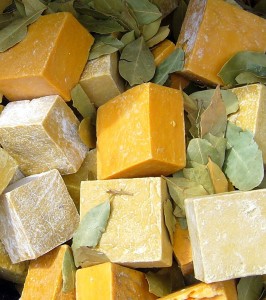
But the article says very little about what the proposal actually would do. European cosmetics standards are a GOOD thing, and, as I understand them, would make it far harder for big corps to sell us harmful “personal care” products. Which doesn’t mean this law isn’t overreaching–just that I don’t know because the article doesn’t tell us. Seems like an easy way around this would be a minimum number of bars per year underneath which producers would be exempt. But even artisanal soapmakers *should* disclose ingredients.
Would small-batch organic soaps be affected? No.
Later, I saw another comment from someone who did take the time to do the research; businesses with less than $100,000 in sales are exempt.
In short, this article is an attempt to stir up hostility with a nonexistent controversy. And it seems that Senator Dianne Feinstein is not an evil tool of the personal care companies after all.
I wonder, if we dig deep enough, if we would find some of the big chemical-based personal care products companies—or perhaps an opponent of Senator Feinstein—have a hand in this disinformation campaign. The list of industry giants supporting the new legislation (and thus, imposing tougher standards for themselves) is a long one but it’s certainly not every company.
Incidentally, I’ve said for years that the tough European Union rules on personal care products were a huge marketing opportunity for companies that meet the standards. Whether based in the US or Europe, the first few companies that demonstrate they meet the tougher standards ought to go be very successful in the stores.
Today, I encountered a post from an Internet friend who lives in Israel, urging Israeli Prime Minister Benjamin “Bibi” Netenyahu to bomb Iranian nuclear facilities.
The post made me feel queasy. My original response was a desire to scream and yell that this was racist. Fortunately, I had enough self-control not to give into that stupid and unproductive urge. I also didn’t want to start a firestorm of negative attacks on me because I had the temerity to disagree with a view that I felt was both racist and extremist. And yet I wanted to confront this way of thinking and not let it go unchallenged.
So instead, I thought for a couple of minutes about what type of response would actually be heard and not blocked out—what could actually advance a dialog. (I will confess that I haven’t always been skilled in that type of response, but I think I’ve gotten much better in the past several years.
And this is what I finally wrote—knowing that my friend is deeply religious, and that an appeal to his religious convictions might actually get through.
Even as poor a student of the Torah as I am knows that God does not want to see innocent blood shed. Your recipe for Bibi would leave hundreds of thousands dead and the Middle East–including Israel–in flames. Possibly the entire world. I urge you to think carefully about unintended consequences.
And amazingly enough, this actually did open a door for some mild and thoughtful dialog. Not a perfect outcome but one I could feel reasonably good about. I had used the marketing principles I teach, and given the right message for the audience.
How much real news went through these cameras? And how much goes through today’s?
When I’m in airports, fitness centers, and other places that force-feed TV news, I’m always astonished that anyone takes it seriously. Even in the 60s when they had real news staffs, it was so superficial. I read somewhere that an entire 1-hour newscast transcript would only fill a couple of columns on a page of the NY Times.
These days, it’s far worse than “if it bleeds, it leads.” Murder, mayhem, celebrity gossip, and an astonishingly small amount of actual news, and even less serious analysis. And those are the serious networks. Add in a serious case of propaganda and distortion and you can’t be surprised at how little most Americans understand their world, if they accept what’s fed to them by the medium they’ve chosen to “consume” the news.
Of course, the good news is that anyone who wants to educate themselves now has unlimited choices from around the world. My favorite newspaper these days is London’s The Guardian. I don’t think I’ve ever seen an actual paper copy.
In the 1980s, I used to subscribe to a magazine called World Press Review, which featured reportage on the same story from 8 or 10 different papers around the world; it was like a one-stop course in media literacy and the nature of 1) matching message to audience, and 2) shaping the audience through the message. Since I made (and continue to make) my career as a marketer and a journalist, these were crucial lessons.
However, it was a monthly, and the stories were at least three months old by the time they got to my mailbox. Of course, technology has passed it by now, and I don’t miss it; we can easily get the same effect by viewing the same story on NPR, Fox News, Al Jazeera-English, the New York Times, Paris Match (which Google will even translate for you, sort of), and your local newspaper.