Every year, bestselling author and social media visionary Chris Brogan challenges his huge reader base to come up with three words to provide focus for the coming year. This year, I decided to take the challenge for the first time since 2016. And this time, I’m going to emblazon them on a printout in huge type, and post it where I can see my words every day.  My three words are:

  1. Clarity
  2. Justice
  3. Healing

Clarity

The first three lines of an eye chart
I’ll discuss Justice in Part 2 (with lots of links(), and Healing–including  a deeply personal experience that happened to me this month–in Part 3.eye chart reminds me of having clarity in this year of 20//20 Clarity, 2020 AD

The year 2020 reminds me of 20/20 vision: seeing with perfect clarity. While I don’t expect to achieve perfect clarity, even with the new glasses I’ve just been prescribed ;-), I do want to focus on seeing and acting as clearly as possible.

It’s been several years since I changed the focus of my business toward helping other businesses (and other types of organizations such as nonprofits) find the sweet spot where profitability intersects with environmental and social good.

I now market myself as the person who can help any organization discover opportunities to do go in the world by creating, identifying and re-purposing, and/or marketing profitable products and services that turn hunger and poverty into abundance, war into peace, and catastrophic climate change into planetary balance.

I’ve gotten a lot clearer in my messaging since starting this quest in the summer of 2013, since giving my TEDx talk in 2014, and even since publishing my 10th book, Guerrilla Marketing to Heal the World, in 2016 (which Chris Brogan endorsed, along with Seth Godin, Jack Canfield, and many others).

But I’m still nowhere near as clear as I need to be about:

  • Who wants to pay me to do this work?
  • Which services they most want, and to achieve what goals?
  • How to set a price structure that’s fair both to solopreneurs and large corporations? 
  • Who do I most want to serve?

I’m beginning to figure out the answers. I’ve settled on pricing based on the size of the organization, which seems reasonably fair because larger organizations are more complex and therefore a task such as a marketing plan our outlining a product development campaign will take a lot more of my time–but I’m not sure I’ve got all the bugs worked out yet. I’ve realized that I’d rather work with small entities than large ones, but I am very open to being farmed out by a larger entity to their smaller customers, suppliers, or business units–and to the larger entities sponsoring me in other ways, such as funding my speaking to organizations that can’t otherwise afford me.

Hopefully, seeing that message of clarity on the wall of my workspace every day will inspire me to figure all this out, and to make my message so clear that everyone understands exactly how I can help and why it’s important.


I’ll discuss Justice in Part 2 (with lots of links), and Healing–including  a deeply personal experience that happened to me this month–in Part 3.

Facebooktwitterpinterestlinkedinmail

Nostalgiawashing: pretending that you represent the “good old days” of small-town, small-business artisanship while actually running a large, highly mechanized operation.

Although I just invented the term (zero relevant hits on Google), nostalgiawashing’s been a thing for decades. Think about Jack Daniels or Pepperidge Farm. Or nostalgia-driven experience-based companies like Cracker Barrell and even Disney. (Disney is a bit schizophrenic on this, because it markets both nostalgia (for example, Main Street, USA) and its opposite, which I’ll call “tomorrowism” (for example, Epcot). All these companies try to bring us back to a simpler era, when nearly all the figures of authority were straight, white, middle-aged, able-bodied Christian men, and when the upper class could mostly avoid contact with the “masses yearning to breathe free”: immigrants and locally-born alike in the lower classes. Of course, that era never actually existed!

I’m not going on the warpath to eliminate nostalgia-based marketing, even when I think it’s deceptive enough to be called nostalgiawashing. But at least don”t insult our intelligence with it!

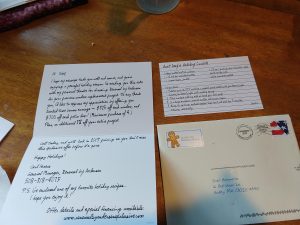
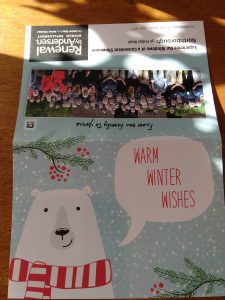
This is inspired by a mailing that did insult my intelligence. It was a card that offered “warm winter wishes” on the outside and then offered me a discount on replacement windows and “one of my favorite holiday recipes” (included on a separate index card). I have been a customer, getting replacement patio doors from them a few years ago, so I’ll give them credit for at least keeping in contact. Here’s why it didn’t work:Four-piece mailing from the window company

  • The envelope used a very nice handwriting font, but a return address sticker without a name, just an address…a first-class presort stamp and a sprayed-on barcode. It wasn’t difficult to figure out that this was bulk mail, though I thought it was from a charity.
  • The card is in a different handwriting font, even though it purports to be from the same person who addressed it. And they even positioned the text so it slants up the page–but uniformly on every line??? Come on, people, do you really think you’re fooling anyone?
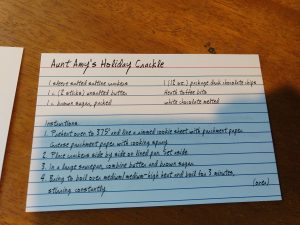
  • I understand why the recipe card, on what pretends to be an old-fashioned index card, uses yet a third handwriting font–because, of course, the manager’s “Aunt Amy” wrote it. But at the end of the second side (not shown), it has a copyright notice in the name of the company. And the recipe itself is something I personally found disgusting. I can’t imagine wanting to make a dessert out of a whole sleeve of saltines, and Heath bar bits.

Of course, I don’t happen to be in the market for new windows anyway. Even if the mailer had been brilliant, I don’t need what they’re selling. But if they were a client of mine, I would have not only used a completely different approach, but recognized that not a lot of previous customers necessarily need four more windows right now and provided incentives for referrals.


Facebooktwitterpinterestlinkedinmail

Guest post by Seth Godin, 

Seth Godin. Photo by Jill Greenberg. Courtesy of Seth Godin.

reprinted with his permission. Originally published on his blog under the title, “‘Not good enough’ is an easy place to hide


Sniffing at the others who care is a form of virtue signalling. It’s also an ineffective way to create real change.

“My Prius Hybrid gets 140 miles per gallon.”

“My Tesla is solar powered.”

“Really, well I take an electric scooter.”

“We carpool by sharing a horse.”

“A horse? You should walk!”

This misses the real problem: The 1998 Chevy Suburban, with just one person on board, doing a forty-mile commute at 12 miles per gallon.

The same goes for ranking elected officials on who is the most perfect on the issue we care about.

The people who are paying attention are the ones who are trying. And shaming people who are trying because they’re not perfect is a terrific way to discourage them from trying. On the other hand, the core of every system is filled with the status quo, a status quo that isn’t even paying attention.

Focusing the group’s energy on shutting down stripped-mine coal is going to make far more impact than scolding the few who are trying.

Facebooktwitterpinterestlinkedinmail

A lot of people tend to get upset when they see an article about governments spying on their citizens. For instance, this article in Common Dreams, ‘Highly Disturbing’ Pentagon Document Shows US Military Surveilling Groups Protesting Family Separation.

Surveillance cameras. Photo by Pawe? Zdziarski [CC BY-SA 3.0 (http://creativecommons.org/licenses/by-sa/3.0/)]

But this is not exactly a surprise. Government spying on activists has been a thing since at least the 1920s, and the more we develop tech tools, the easier it is to spy. This article cites a spy report that sure looks to me like the Attending/Interested numbers were simply copied off a Facebook event page.

But don’t let Big Brother scare you off activism. Privacy is an illusion. If you have a bank account, credit card, driver’s license, medical record, or even a salaried job, you gave up your privacy long ago. These days, even walking down the street puts you on “candid camera.”

This doesn’t mean we shouldn’t protest intrusions on our privacy. But we have to live our lives as if we’re under constant surveillance–because we probably are.

In the 1970s, I was suspicious enough that my phone was tapped that every once in a while, I’d say things like, “FBI agents, get your pencils. I’m going to give you my recipe for three-minute chocolate mousse.” And then I’d tell them to melt chocolate chips, mix it into ricotta cheese, add cinnamon and cocoa powder, vanilla extract, and maybe a bit of rum.

To me, this was a really empowering way to handle it. It said that I was aware of the possibility that someone was listening, and that I wasn’t disclosing any sensitive information–not that I even had any–so they ay as well not bother to listen. And it brought a little humor to my day, and hopefully, to theirs.

Facebooktwitterpinterestlinkedinmail

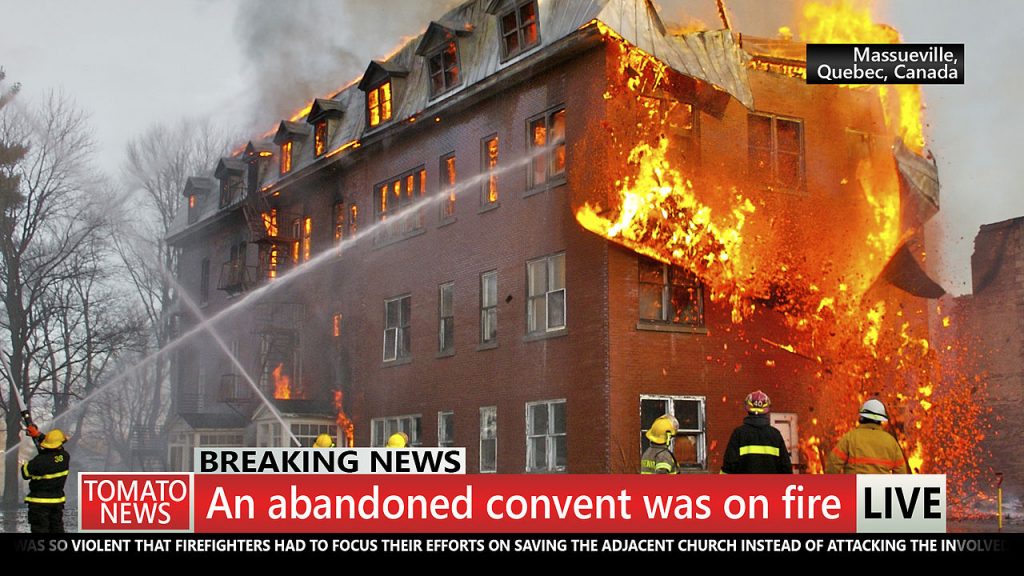
Simulation of TV newscast. By Original photograph by Sylvain Pedneault. Derivative work by Mike Liao. - Self-made. (Modified from Image:FirePhotography.jpg, under Creative Commons Attribution ShareAlike 3.0 license., CC BY-SA 3.0, https://commons.wikimedia.org/w/index.php?curid=4500164

Remember some of those unflattering names for TV in the 1960s and 70s? “Boob tube.” Idiot box.” I think these names are rooted in the neurological changes TV works on our brains, combined with the inherently passive nature of watching–AND with the low content quality that too often marks this powerful and addictive medium.

TV too often incites violence and racism. And I don’t choose to play in that sandbox. For every Mr. Rogers or Sesame Street inculcating positive values, for every National Geographic or Discovery Channel special that broadens our sense of what is possible, there are dozens of shoot-em-up adventure shows and newscasts to focus our attention on the worst parts of our society. And it’s all tied together with ads designed to make us feel inadequate because we don’t buy certain brands. As Mick Jagger sang, “He can’t be a man ’cause he doesn’t smoke/the same cigarettes as me.

The original promise of cable TV was no ads in return for the monthly payment (1970s). But that original promise didn’t last very long! I grew up in NYC, which had seven stations on the VHF band, plus what must have been another 20 on UHF for those who had sets that could pull them in. Moving to places that had only two or three channels on the broadcast spectrum, I could see the appeal, at least for those who love TV.

TV is not an active part of my life.

We moved when I was 10 and left the big clunky ancient black-and-white TV behind. We didn’t get another one for two years–just in time to watch All In The Family. That was pretty much the only show I watched through high school. Through much of my early adult life, we didn’t even own a TV.

And when we got one, it was mostly as a video monitor, with some PBS kid shows on the side. We thought it was healthier to let our kids watch up to an hour a day of content-supervised TV than to ban it altogether and have it become alluring forbidden fruit.

A few years ago, when regular old broadcast TV was discontinued, our cable company gave us a converter box free for the first two years. We never even got it to work properly, and when the two years were up, we returned the box and eventually convinced them that we shouldn’t be paying the $10 month for a service we weren’t using. They acted deeply shocked but eventually lowered our bill. They supply both our landline phone and our broadband Internet.

A few times a year, we go to a friend’s house or a public place to watch a presidential debate, World Series game, or other special broadcast. I think TV news is the worst kind of mind pollution and get my news from other sources–that’s been true for decades, even when I had a working set. I still read my local daily newspaper, which has great coverage of my own region and at least some coverage of the wider world. I read a ton of e-newsletters that keep me informed within my various niches, and click to interesting links on social media (which has its own positives and negatives)–yes, including some TV clips. I’ll listen to radio news and public affairs programs such as All Things Considered (NPR) and Democracy Now (Pacifica). And yes, I spend some time daily on social media.

In fact, I deeply resent being forced to watch TV news with all its shallowness and violence when I ride elevators, wait for planes or buses or trains, or use a hotel fitness room. If there’s a great skit on Saturday Night Live or a new Randy Rainbow parody, or shocking testimony implicating high government officials, I will hear about it on Facebook and watch online. I worry about the people who spend so much time watching violence disguised as news, especially if they do it right before bed, leaving the whole night for the subconscious to absorb the message that this is normal.

It’s not.

There’s plenty of good in the world. People doing amazing things: harnessing technology to solve problems like hunger, poverty, war, and catastrophic climate change…finding new ways to empower others…joining with neighbors or colleagues to do something too big for any one person or company–but the media is trained to focus on what’s wrong: “If it bleeds, it leads.” There are some nice exceptions, like Yes Magazine, Positive News, and Good News Network (among many others), that consciously focus on positive news–and even some mainstream outlets join this happy chorus. Also, because I’m in the green business world, I read publications like GreenBiz, Eco-Business, and Triple Pundit that are tremendously tilted toward highlighting positive innovation but don’t shy away from negative stories that need to be told.

While I don’t duck from the unpleasant things happening, I don’t steep myself in them. I surround myself with enough positive news (through those and many other channels) to insulate me from the bad effects of soaking in negativtiy. I recommend doing that as much as possible.

What strategies do YOU use to stay focused on the change you can make rather than letting the problems paralyze you? I’d love to see your comments, below.

Facebooktwitterpinterestlinkedinmail

50 years ago today, October 15, 1969, my life changed forever. That was the day I became an activist, for real.

Yes, there was a time when as a toddler, I destroyed the cigarettes my parents’ party guests left lying around on the coffee table to protect the air quality of our apartment. Yes, there was the one-kid boycott I started that summer of 1969 of a movie theater that charged me for an adult ticket and made me sit in the children’s section (and I have still never been back to that theater). Yes, I grew up in a social change household and my mom dragged me around with her as she campaigned for Eugene McCarthy in 1968. Yes, I had already decided to become a vegetarian, although my mom had extracted a promise to wait until I stopped growing. So I was predisposed. But I wasn’t an activist yet.

But that day, I participated in the national Vietnam Moratorium Day—which is why I still remember the date—and went to my first peace rally. Alone, I walked the few blocks from our apartment building on Loring Place at Tremont Avenue to NYU’s Bronx campus (now Bronx Community College), where I listened to the speakers.

Marching at the Women's March on Washington with my wife and children
Marching at the Women’s March on Washington with my wife and children (from left: son-in-law Bobby, daughter Alana, wife Dina, me, son Rafael)

I was 12 years old, and had just started 9th grade.

One of the speakers, who was probably only about 6 years older than me, proclaimed, “The Vietnam war is an undeclared war.”

I hadn’t known that.

And with this statement, my whole world came crashing down. All my faith in the checks and balances of the American system of government that I’d learned from social studies teachers turned out to be a lie. I started questioning everything I knew.

I still show up at many demonstrations. In the photo above, I’m holding a sign that says “Patriots Protect People and Planet” that I made for that protest: the Women’s March counterinaugural on January 21, 2017. A few days later, I turned it over and wrote “Another Jew for Human Rights,” and brought it to protest the administration’s first attempt at a Muslim ban. Both sides of that sign have gotten quite a workout the past 2-3/4 years.

But I learned early that showing up at demonstrations isn’t enough.

When my carefully constructed world fell apart on that October day in 1969, I started looking for ways to make a difference. To find that path back to the democracy I’d been promised, to make sure the system worked so the next time the US went to war, it would have at least been vetted by Congress (little did I know how THAT would play out! Most American wars since then have also been undeclared.) And to work for peace.

So peace and democracy were my first causes. A few months later, the first Earth Day added the environment to my focus. Over the years, I took up many others: human rights/opposing discrimination, safe energy, affordable housing, food and transportation justice, social change journalism, dialogue across differences, and many subsets and intersections of these.

Before long, I was joining organizations, writing and publishing about social change actions (starting with articles in an alternative paper at my high school when I was 15), planning events from speakers to rallies to the safe energy “swim-in” where I gave my first TV interview dripping wet in my bathing suit, building coalitions,  doing the hard work of helping to build movements–and making tons of friends, by the way. In fact, I’m going to a meeting of our Western Massachusetts Jews for Immigration Justice meeting this afternoon, where we’ll debrief a successful mass rally we held last week and plan our next steps.

Many of these were just as accidental or based on a random insight as my original peace activism.

Although I joined my first two environmental action groups (one in my neighborhood and one in my high school) I only got into the safe energy movement in a real way after researching “the pros and cons of nuclear power” for a college paper in 1974—and that in turn led directly to my getting involved with Clamshell Alliance and getting arrested at Seabrook three years later (another life-changing moment). This is the sign I carried to that action.

Sign by Nancy Hodge Green, used at Seabrook, 1977. Photo by Shel Horowitz
Sign by Nancy Hodge Green, used at Seabrook, 1977. Photo by Shel Horowitz.

My paths to human rights and opposing discrimination came in part from being told I was too young to count when I was an early activist, in part from my own coming out as bisexual as a 16-year-old college freshman, in part from being hired at age 22 for my one and only paid organizing job—charged with building a near-defunct Gray Panther chapter in Brooklyn (as a VISTA Volunteer with pay the first year of $82 a week in NYC!), in part from a growing awareness of disability issues as a 6-year member of Northampton’s official city Disability Committee, and in part from seeing the urban poverty all around me in the various cities I lived in as a child or during college internships—such as the ghetto neighborhood in Washington, DC I walked through on my way to work, or the one I biked through to visit my then-girlfriend (now wife of 36 years) in Brooklyn.

But it also comes from inserting myself into situations where some people might think I don’t belong—whether attending poetry gatherings in black neighborhoods or staying in Arab and Druze villages in Israel or visiting a colleague in Ramallah (Palestine).

Founding Save the Mountain was an accident of geography. I had only been living in the neighborhood we saved for just over a year when a developer announced plans to destroy it. And my work this past summer on immigration justice was also an accident.

Yet, after all these years, I am still deeply involved in those first three issues that found me: peace, the environment, and democracy. I’ve changed the way I participate—for instance, speaking to the business community on how social change and environmental healing can be profitable—but they are still very much a part of who I am.

I am grateful to that long-ago young man, and I wish I knew his name to say thank-you. I wouldn’t be the person I am today without his speech.

When I started, I was told I was too young to make change, and now, at 62, I’m beginning to hear that I’m too old, But as teen activist Emma Gonzales would say, I “call B.S.” on both claims. Like many of my friends and mentors, I expect to continue being an activist into my 90s and even 100s, if I live that long.Facebooktwitterpinterestlinkedinmail

One of my marketing buddies, Marisa Murgatroyd, posted a picture of Greta Thunberg along with an inspirational message about how Greta’s work empowered Marisa to find her own place to make change.

Greta Thunberg on the cover of GQ, with commentary by Marisa Murgatroyd (Instagram screenshot)

It attracted a lot of comments, many of them expressing thanks for a great post–but others, far too many, dissing Greta and her work. Here’s my comment, in italics.

Thanks, Marisa, for posting this. Shocking how many people are posting to tear this young woman down because she’s changing the world. She will probably grow out of her extremism but if the world is lucky, she will keep her passion. I ask every person who is putting Greta down: what have you done in HER lifetime to make the world better, and what are you doing now toward that goal? Why is it important to you to spend your good energy attacking someone who is making a difference in the only ways she knows how?

And before you attack ME for using the word, “extremism,” remember this:

  1. This was a response to people who see her as an extremist. I used their own talking point to perhaps be listened to–to increase the chances that I might change a mind or two.
  2. Greta is acting out of deep despair. She does sound extreme at times. But let’s remember how hard it is to act out of despair, even if you don’t have Asperger’s (as she does). Positive motivators tend to work much better. To act from a dark place in a positive way is itself remarkable. In time, she will learn (as I did) that the world can be a very positive place, and we get the fun job of making it more positive, harnessing and amplifying the trends in the good directions, doing our best to neutralize the haters and the planet-killers. And that while the pace may seem glacial, we are actually winning.
Facebooktwitterpinterestlinkedinmail

As a supporter of Elizabeth Warren’s presidential campaign (and a resident of Massachusetts who’s seen the positive impact she has had on the state she represents), I got asked to do a survey of what issues I felt were most important.

Senator Elizabeth Warren of Massachusetts

While it was tempting to check every choice, I limited myself to 12 of the 32 options.

And then there was an open question:  “Is there anything else you’d like to share about why you’re in this fight?” This is what I wrote:

I see the two biggest challenges as peace and climate change. The US has a major role to play in both, starting with STOPPING our support for repressive governments around the world. To get there, we have to have meaningful electoral reform to secure our own democracy, meaningful gun policies that make it at least as hard to get a gun as it is to get a license to cut hair, and policies/tax codes that eliminate all subsidies for fossil and nuclear while encouraging a rapid transition to solar, wind, hydro, and other true clean renewable technologies–including a deep conservation retrofit program. I’ve been a supporter of yours since your first run in Massachusetts (where I live) and an activist for 50 years starting at age 12.

Facebooktwitterpinterestlinkedinmail

Concern for the planet—and the living things that ride "Spaceship Earth"—is good for business (picture of Earth and sun)
Concern for the planet—and the living things that ride “Spaceship Earth”—is good for business 

One of my goals is to spring the message about regenerative, profitable business more widely. So I’m reaching out to other publications, and not just publishing on my own blog. 

When I do something worth sharing here, I’ll post the link—as I’m doing here.

After the Business Roundtable, consisting of most of the US’s most powerful corporation heads, finally rejected the tired old bottom-line-is everything mentality last month, I pitched an article to GreenBiz.com on what that means for green and social change businesses. You can read it at https://www.greenbiz.com/article/how-business-roundtables-big-green-shift-creates-opportunity


Facebooktwitterpinterestlinkedinmail

Guest post by Jacqueline Simonds.

Way back in 1979, I worked in a Texas bar & grill. One of my co-workers discovered she had Graves Disease/hyperthyroidism. She was put on a medication and her slightly bulging eyes and weight started to diminish.

Then she discovered she was pregnant.

[Recall that in 1979, there were no home pregnancy tests available. By the time she figured out she might be pregnant, and got into the doctor, she was maybe 2 – 2.5- months along. That’s 6 – 8.5 weeks.]

She told the doctor who was treating the thyroid, and he freaked. The medication she was taking would 100% result in a mangled fetus. He insisted she get an abortion – for the sake of her health, and her family.

My friend, a Latina, was also very very Catholic, and already had 3 children with her husband. This caused a terrible crisis for her. So she went to her priest, and told him what the doctor said. He immediately told her she couldn’t have the procedure, because it was against God.

My friend was completely wrecked by the moral and ethical challenges before her. What should she do? She understood the danger, but the priest said it was wrong. She cried all day at work.

She called her doctor and told him what the priest said. Then the doctor did something sort of amazing.

He called the priest and asked him to come to the office.

When they met, the doctor explained what was happening in my friend’s body. He showed the priest pictures of what a healthy developing fetus looked like, and what would happen to this one. And then he described, in great detail, the life my friend and her family would have. That my friend would have to quit work, and take full care of the child, for the rest of its life (caring for a medically-challenged child was even more financially and emotionally draining then than it is now).

But more, the doctor said, is that it might just kill her. Then her 3 children would be left without a mother, her husband without a wife, the parish without a devout member. And how did this serve God? How, he asked the priest, can you help her best? (He did not demand that the priest give in to the doctor’s way of thinking.)

The priest was astonished at all this information, and asked for time to go and pray. The doctor told him he encouraged him to do so, but not to take too much more time. The procedure had to be done soon.

The next day, the priest called my friend and told her he felt God wanted her to lay down the burden of the pregnancy, and that the priest himself would take her to the procedure.

And he did. And she was saved.

My friend suffered guilt and remorse and sorrow on a scale I could barely stand to watch. But with all of our love, she got through it.

If the conversation between the priest and the doctor seems unlikely to you, it is because times have changed that radically. We were on the middle path back in the 70s, where you could object to abortion, but see its necessity. When you could be pro-choice, but have an adult conversation that didn’t involve a screaming match – and therefore might change a mind.

Extremism erases rationality and damages real people. Right now, we HAVE to fight right wing pseudo-Christian extremism, because it is a toxic poison to women’s bodily autonomy. Once we can force the extremists back into the shadows, we can return to a time of the middle path, where your decision is YOURS.

Facebooktwitterpinterestlinkedinmail