There’s one Democratic Party candidate for Congress whose annoying emails just pushed me over the edge. But the Democratic Party is routinely guilty of this, and I’ve gotten off many of the lists of their various front groups. And probably, so are the Republicans (I’m not on their lists).

As I moved a full 100 emails received in the past month from this candidate’s organization or the Democratic Party on behalf of this candidate, I noted once again the in-your-face headlines. Here are just some of the examples from just the past week, in the order I received them (spacing, emoticons, and capitalization in the originals):

  • Special Election RUINED
  • TERRIFYING prediction
  • this just got WORSE (Paul Ryan)
  • ? Paul Ryan = FURIOUS ?
  • please, please, PLEASE
  • HUGE mistake
  • No!!!!!!!
  • R U I N E D

I’m a copywriter. I know what this candidate’s team is doing, and why. I know which hot buttons they are trying to push. But just as too much of the finest food still gives you a bellyache, too much hot-button-pushing makes the mechanism seize up. I’ve received 14 separate messages since Sunday morning (I’m writing this on Tuesday morning). It feels like marketing by assault rifle.

My response mechanism seized up. I put them on the not-giving-any-more-money list and unsubscribed. The form asked for a reason, and here’s what I wrote:

I don’t like your constant-crisis approach. I just deleted 100 emails from you all screaming at me, most unopened. I’m really sick of “the Republicans are out to get us, send us money again.” And also sick of “we’re on the verge of victory, send us more money.” I wish [Candidate name] well and hope he wins, but I want the Dems and especially [Candidate name] to market to me via intelligence and not fear. I am a marketer and have run successful campaigns.

Can’ we be better than this? I want candidates who will tell me what they will do FOR their district and their country, and not just that a powerful opponent hates them.

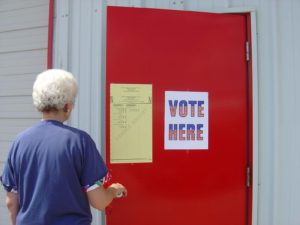
A citizen votes. Photo by Kristen Price.

Remember: you are in someone’s email box because of the recipient’s good graces. Don’t abuse the relationship or overstay your welcome. If you annoy, you don’t get read, and eventually, you lose a subscriber. You could even find yourself blacklisted for spam.

Facebooktwitterpinterestlinkedinmail

Here’s a letter I wrote to US Cabinet Secretaries Tillerson, Perry, and Pruitt (State, Energy, EPA), and to Massachusetts Governor Charlie Baker (with a different subject line). Please write your own letter. You are welcome to model mine. Click to send an email directly to Pruitt and Perry and link to Tillerson’s contact form.

"I wrote a letter to the US government" (picture of handwriting)
“I wrote a letter to the US government”

As a business owner, I ask that you maintain the US’s role in the Paris Climate Accord. The Paris Accord marks a wonderful opportunity for American business to make headway against the widespread perception that European businesses are more environmentally focused. American businesses cannot win back the international market share they’ve lost to environmentally forward-thinking European companies if our own government is seen as sabotaging progress. It would not even shock me if, should the US pull out, activists start organizing boycotts on all US-based companies. Boycotts like this are economically disastrous for the US, just as similar boycotts created enormous pressure on South Africa during the apartheid years and are now beginning to affect the economy of Israel over its presence in Palestinian territories.

I am a consultant to green and social change companies, and I see the positive bottom-line impacts of meeting or exceeding climate goals over and over again. Industries have found that climate mitigation, done right, lowers costs and boosts revenues, thus increasing profitability. I recently attended a conference with speakers from Nestlé, IBM, Google, Pirelli, Coca-Cola, Paypal, clothing manufacturer VFC, and many other global corporations, and the message from every speaker was about the bottom-line benefit of greening their company. This is why companies as diverse as Monsanto, Intel, Dupont and General Mills are among the 1000 companies that signed a public letter this winter urging the US to stay in the Paris agreement.

Progress on climate will also have beneficial effects in the wallets of ordinary Americans–because it will improve health. Reducing asthma and other carbon-related diseases means more discretionary spending and thus an economic boost.

Finally, the long-term picture of addressing climate change in a meaningful way means the creation of hundreds of thousands of new jobs in the energy, manufacturing, and agriculture/food sectors as well as a more livable world for our children and grandchildren. If anything, the Paris targets should be seen as a starting point. And if the US embraces this fully and uses its technological leadership, it will create market opportunities around the world for US companies selling the technologies to make this transition.

Sincerely,

Shel Horowitz – “The Transformpreneur”(sm)
________________________________________________
Watch (and please share) my TEDx Talk,
“Impossible is a Dare: Business for a Better World”
https://www.ted.com/tedx/events/11809

Contact me to bake in profitability while addressing hunger,
poverty, war, and catastrophic climate change

Twitter: @shelhorowitz

* First business ever to be Green America Gold Certified
* Inducted into the National Environmental Hall of Fame

https://goingbeyondsustainability.com
https://transformpreneur.com
mailto:shel@greenandprofitable.com * 413-586-2388
Award-winning, best-selling author of 10 books. Latest:
Guerrilla Marketing to Heal the World (co-authored with Jay Conrad Levinson)

_____________________________________________

Facebooktwitterpinterestlinkedinmail

Found this list of 25 “Greenest Brands in America“—but frankly, I’m skeptical.

It’s based on reader votes. In any kind of reader popularity contest, the votes go to companies the most people are familiar with—or those whose marketers actively campaign and tell their fans to go vote for them.

Certainly, all these corporations have major environmental achievements; by now, every major corporation does. In fact, I attended a conference last month that focused on the profitability case for green action. Several of these 25 had speakers. I even moderated a panel that included Coca-Cola.

But this kind of survey pushes away the small companies with smaller followings but very green practices (Interface, Timberland, Patagonia, etc.) Only two such companies made the list: Tom’s of Maine and Ben & Jerry’s, and both are owned by much larger companies.

Patagonia's fish/mountain range-shaped logo
Patagonia’s fish/mountain range-shaped logo

I was also struck by three absences I would have expected to be there: Walmart, which has done more to green the supply chain and its own operations than any other player, but whose demographic doesn’t typically participate in sustainability surveys (and which has serious issues on other parts of the social entrepreneurship spectrum, especially on labor and supplier policies), Starbucks, which talks a great line to the right demographic, but whose practices don’t always mirror its rhetoric, and Whole Foods, whose entire mission intersects so well with green practices. Also kind of surprised to see Apple included. Either they’ve cleaned up their act or people give them more kudos than justified because their products are so cool and their fan base is so strong. To go from the Foxconn scandal to being named on a Top 25 list for green practices in just over two years is quite remarkable.

Even in surveys based on research, what you measure influences your conclusions. For example, Monsanto often wins data-driven corporate responsibility awards (and loves to brag about them), yet to many food activists, its policies are anything but responsible; they would call this award greenwashing.


Facebooktwitterpinterestlinkedinmail

Have you seen the infamous Pepsi ad that’s been called “tone-deaf” by progressives, and which Pepsi pulled quickly? Before you read the rest of this post, please write your impression of it in the comments.

I watched the part of it shown on this segment of The View.

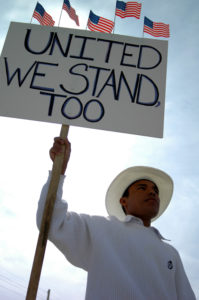
Protestor calls for unity


And I agree with Whoopi: the message is about inclusion.

Yes, it is co-opting the movement. Advertisements have always co-opted cultural memes. If you wear $60 torn jeans, you can thank the hippies and grunge-punks who wore their clothes to rattiness. For that matter, Bud commercials and Wheaties cereal boxes have been co-opting sports culture for decades (it feels like millennia).

I’m old enough to remember when hijab-wearing women and people of color and same-sex couples would not have been allowed anywhere near a commercial. What I see most of all is a message to DT that we are united in our diversity (and that includes the cops, who are actually our allies most of the time–and which the movement made a big mistake in automatically trashing in the 1960s).

I also agree with Whoopi that water is my preferred drink over any kind of soda.

That Pepsi was attacked to the point where they pulled the ad is much more shocking to me than the ad itself.

But I guess I shouldn’t be shocked. Here in the Blue Bubble, behind the “Tofu Curtain” (not a phrase I invented) in Massachusetts’ Hampshire/Franklin Counties—one of the bluest parts of a very liberal state—those accusations of “tone deaf” are all-too-familiar. Two among many examples:

  • A program in which cops in the schools did something sociable with the kids was kiboshed and the very progressive police chief (an out lesbian who was seen at Pride Day marches long before she became chief) was trashed as tone-deaf
  • Two towns over, several years ago, a production of “West Side Story” was canceled because some people thought the whole idea of the play was racist. I don’t know if they read the script or saw the movie, but to me, that movie makes a statement against racism, just like Twain’s Huckleberry Finn (which has also been criticized for racism, because it uses the N-word—even though it was written in the 19th century when that was the term used and the whole premise of the story is to show the absurdity and cruelty of racism)

It reminds me of the days when the left (my teenage self included) would practically canonize any extreme statement that happened to be made by a person of color or one who identified as any shade of LGBTQ, even if that statement incited violence against innocent people who happened to be white and straight. I should have spoken out against those outrages 45 years ago, but I was just as hoodwinked.

I’m not talk about any false unity of sweeping real grievances under the rug. But I am objecting to the shrill side of political correctness that demonizes the Other without even listening, even when the Other is mere steps away on the political spectrum, dividing instead of uniting and leaving us all at risk when the real forces of repression sweep in.

Facebooktwitterpinterestlinkedinmail

Here are two press releases from two different NGOs responding to the same major news event (and the graphic that one of them included). I’m giving you the headline and first paragraph, and a link in each headline to read the whole thing—and then I’ll dissect them for you. Neither of these is a client and I had nothing to do with writing them—so this is purely about the lessons we can draw.

Example #1:

Empty podium with Presidential Seal in Yosemite National Park—included in the BSR press release

BSR regrets today’s executive order from U.S. President Donald Trump to dismantle the Clean Power Plan, a set of U.S. Environmental Protection Agency (EPA) policies that are intended to reduce the United States’ greenhouse gas emissions by 32 percent from 2005 levels and cut carbon pollution from the power sector by 30 percent by 2030. In combination with the administration’s dramatic cuts to climate programs at the EPA and U.S. State Department, this announcement undermines policies that have stimulated economic growth, consumer savings, job creation, infrastructure investment, private-sector competitiveness, and public health.

Example #2:

The Trump administration’s efforts to dismantle the U.S. Climate Action Plan, including withdrawing support for the Environmental Protection Agency’s Clean Power Plan, “is completely misguided and ignores the irreversible clean energy economy that is already underway, creating good-paying jobs and economic vitality in communities across the country,” Ceres President Mindy Lubber said in a statement today. Lubber served as the EPA Administrator for the New England Region in 2000.

Which did you find more effective?

Ask yourself just two questions: which worked better for you, and why? Then scroll down to see what I felt worked well and poorly about each.

If you’d like me to include your results in a summary (you won’t be identified), please drop me a note with your answers.


 Shel’s Analysis:

While the BSR release did a better job understanding the need for rich content, with numerous links and a picture, the copy was pathetically weak. This press release:

  1. Used a wimpy headline that doesn’t take a position
  2. Chose a stock photo that doesn’t add anything to the reader’s understanding—why not a photo of demonstrators thanking a company for providing clean energy and good jobs?
  3. Made a terrible verb choice in “regrets”—which makes it sound like an accident that was BSR’s faults—rather than a much more appropriate verb, like “condemns”
  4. Buried the real story in the second paragraph, which has hard-hitting facts to make a clear case against the Executive Order:
Just 18 months ago, the U.S. federal government estimated the net economic benefits of the CPP at US$26-45 billion, with consumers set to save US$155 billion from 2020 to 2030. In addition, the CPP provides regulatory support to the clean energy economy, which, according to the U.S. Department of Energy’s Energy and Employment Report, supported more than 3 million U.S. jobs in 2016. The public health benefits are also significant. Research suggests the Clean Power Plan could prevent 3,600 premature deaths and more than 300,000 missed work and school days by cutting pollutants that contribute to soot and smog. – See more at: https://3blmedia.com/News/BSRs-Statement-US-Administration-Executive-Order-Climate-Change#sthash.qUNCeiiF.dpuf
I would have used a headline like “BSR: Trump’s Short-sighted Reversal of US Climate Change Leadership Could Cost Consumers $45 Billion and Kill 3600″—and then moved right into a bulleted list of the facts. I also would break up BSR’s long paragraphs.
This very long press release has enormous amounts of juicy content, but you’d never know it from the headline and lead. Even further down, it notes that companies investing in carbon mitigation are seeing 27% return on investment, 29% revenue increases, and 26% reduction in carbon emissions. Isn’t that a lot more newsworthy than “BSR regrets…”?
The Ceres release, while also flawed, is much better. It starts with a headline expressing a strong point of view (although we don’t know who is stating this point of view), moves into a sound bite, and finishes the first paragraph with a significant and highly relevant credential.
So what are the flaws in the Ceres document?
  1. The release itself is pretty much all rhetoric, without the facts to back it up. BSR had the facts, but didn’t call attention to them.
  2. There’s no link to Lubber’s complete statement (and only two links in the whole release).
  3. The important point about losing competitive advantage to China is all the way down at the bottom of the release.
  4. No graphics at all.
Facebooktwitterpinterestlinkedinmail

Being political can be a very good thing for a business—look what it’s done for Ben & Jerry’s. I believe that social/environmental responsibility is what made B&Js a player with 40% or more of the superpremium ice cream market. Without it, it would be just another among the hundreds of minor players with slivers of market share. Many other companies have also benefitted by their strong stands, including Patagonia, The Body Shop, Interface (flooring company), and many others.

But there has to be a good match between audience and messages.

Which is what makes Budweiser’s “Born the Hard Way” Superbowl ad so surprising, almost shocking.

The football-adoring working-class male Bud drinker (a big part of their audience) is one of the demographics most likely to have voted for DT. Many voters in that demographic had enough comfort with the anti-immigrant rhetoric and action that they cast that vote, even if their motivations were on other issues (such as believing that DT would create more jobs). In other words, this ad could anger a large segment of Bud’s core market. Taking that risk is an act of courage.

Budweiser bottle (photo credit Paul Fris)

Those out in the streets for immigrant rights who are not themselves immigrants or the children of immigrants probably skew rather heavily toward craft beer. I don’t think as great a percentage of them will be going for Bud, Coors (BTW, heavily associated in the 1970s with right-wing causes, before it merged with Molson), or any other industrial beer. It’s also worth pointing out that Islam is a no-alcohol religion (though that commandment is not always followed). So Anheuser-Busch is being quite courageous. If right wing elements (or DT himself) call a boycott, it’s going to be hard to get those who support their position to also support their beer.

I speak out of my own tastes here. I am delighted that Bud took this stand. The company says this ad was prepared in October, before the anti-immigrant candidate eked out his Electoral College victory. That may be. But that also left them two months following the election to decide not to run it. Going forward raises my respect for A-B. But until an American Bud tastes as good as the incredible Czech Budwar (originated by the same family), I still won’t want to drink it. I might talk about them in my speeches or even invest in the company, but I’m not likely to be a customer, let alone a brand loyalist.

Wouldn’t you love to be a fly on the wall when A-B discusses this commercial at its next high-level strategic marketing meetings?

If you like to study Superbowl ads, BTW, here’s a reel of someone’s choices for the top 10 of this year. (My comments are underneath the video.)

https://www.youtube.com/watch?v=XF3wOrWBKjc

The “Born the Hard Way” Bud ad didn’t make the cut, though another Bud ad did. I don’t know who curated this, but I don’t share that person’s sensibility. As a group, I found them disjointed, way too violent, and for the most part not focused on selling (other than the McDonald’s “Big Mac for That”). Why does Mercedes spend 3/4 of their ad on a play fight among motorcyclists in a bar? Why was it such a struggle to even make the connection between the Humpty Dumpty ad and the product that less than half an hour after watching, I can’t even remember what the ad was for? Considering how many millions of dollars go into producing and airing each of these ads, it just makes me scratch my head. Is this really a successful marketing strategy?

Facebooktwitterpinterestlinkedinmail

Nonviolent action theorist/activist/author George Lakey published a fabulous essay, “A 10-point plan to stop T***p and make gains in justice and equality” last week*

George Lakey, activist and author (most recent book: Viking Economics)

George has been a hero and mentor of mine ever since I first heard him speak around 1977. His presence at Movement for a New Society’s Philadelphia Life Center was a big part of why I moved to that community for a nine-month training program in nonviolent action, back in 1980-81.

He argues that this is our moment to break out of reactive protests and into big sweeping social and environmental demands. He notes that the LGBT movement was one of the only progressive movements to gain traction under Reagan—because its agenda was so much bigger than just fighting cutbacks. Twenty and thirty years earlier, the Civil Rights movement accomplished sweeping social change as well.

So instead of defending the weak centrist gains of the past 30 years, we go beyond and organize for our wider goals. We refuse to play defense against DT’s shenanigans and instead take the role of pushing for a new, kinder, people- and planet-centered normal. With direct-action campaigns that link multiple issues, such as Standing Rock, and with alternative institutions like the Movement for Black Lives, we create a nonviolent invasion of deep social change (this is my metaphor, not George’s).

In short, we think bigger—and act bigger. and instead of crawling to the politicians, we force them to court us as they see us come into our true power.

I’ve been saying we need to think bigger and more systemically for years. George says it succinctly and eloquently, and with a lens I hadn’t looked through.

How does this apply in today’s world?

  • The Republican attack on what George calls the “medical industrial complex-friendly Affordable Care Act” (a/k/a Obamacare) is a chance to bypass the witheringly bureaucratic and unfair insurance system and push for real single-payer, Medicare-for-All plan of the sort that’s worked so well in Scandinavia (he explores the Scandinavian social safety net in his latest book, Viking Economics)
  • The Standing Rock Water Protectors have linked multiple issues into a coherent whole: clean water, the environment generally, the rights of indigenous people (among others)
  • Movements around creating a meaningful safety net, such as the $15 per hour minimum wage, can reach disaffected white working class voters as well as people of color; when those who voted for DT on economic grounds realize he has betrayed them, we can win them over (I would add that this will only work if we have mechanisms in place to defuse the racism and nativism that DT used to attract them, and have meaningful ways to integrate the lesson that all colors, races, and religions can be allies to each other and are stronger together—and Lakey does point out that the United Auto Workers has been successful organizing on these unifying principles)

I could add a lot to George’s list. As one among many suggestions, let’s push to not only end all subsidies to the fossil and nuclear industries but let’s push for a complete transition to clean, renewable energy—whether or not we get any help from the government.

Read his essay. Come back the next day and read it again. Then share it with friends, social media communities, and colleagues and discuss how you personally and your group of individuals with shared positive purpose can make these changes happen.

*Why did I replace DT’s last name with stars? And why do I call him DT rather than by his name? Because I am doing my best not to give him any search engine juice. I don’t want him showing up as “trending” or driving traffic to him.

Facebooktwitterpinterestlinkedinmail

I’m starting this post at 2:30 a.m. on January 21, as I prepare to board a bus to Washington, joining the Women’s March for human rights that will greet the newly sworn in US president on his first full day of office. Hundreds of thousands are expected in Washington, New York, Los Angeles, and many smaller communities. Post-event note: at least 3.3 million to 4.6 million demonstrators came out around the US, plus hundreds of thousands more elsewhere in the world in more than 600 events. I’m finishing it the next day.

Several people have asked me, “Why don’t you give him a chance?” And my father-in-law, a liberal, shocked me with a different question: “He won. Why are you still marching?” Later, someone else asked me the same question on Facebook.

Marching at the Women's March on Washington with my wife and children
Marching at the Women’s March on Washington with my wife and children (from left: son-in-law Bobby, daughter Alana, wife Dina, me, son Rafael)


The Chances DT Has Failed to Take

I have given him not one chance but many, and he has failed to take them. I feel it is my patriotic duty to speak out against his agenda, to remind him that he not only has no sweeping mandate—he lost the popular vote “bigly”—and to remind my fellow Americans that his election was not clean and his behavior has not met any legitimacy tests.

This was already abundantly clear during the campaign. Back in August, I wrote an open letter to DT that called him out for his racism, misogyny, and bullying.

Despite my harsh language, when he eked out his narrow victory, I was still willing to give him lots of chances. But here’s what happened, just to name a few:

I don’t want to make this blog into a book, so I will stop there. I would love to have been wrong on this. I would have deeply delighted in the emergence of a new and different DT, one who really was trying to “make America great.”

My Patriotic Duty
One final reason why I marched: the most important one of all! As a patriotic American who believes this country is already great and that DT’s and/or his surrogates’ policies on the environment, women’s rights, minority rights, education, freedom of the press and other freedoms in the Bill of Rights, and a whole host of other issues are not just the wrong path, but take us down the ugly (and utterly unacceptable) road that Germany and Russia took in the 1930s. I not only refuse to be part of that takedown, I feel it is my duty as someone who cares about my country to stand up and say NO. When my as-yet-unborn grandchildren ask me, decades from now, what I did to protect our country and planet at this critical time, I will be able to stand proudly, as my mother did about her role in the Civil Rights movement in the 1960s, and say that I was there. I stood up for what’s right.

Facebooktwitterpinterestlinkedinmail

Dear Senator Gillibrand,

I have been a fan of your since you took office. However, after following your Facebook link to the Planned Parenthood funding survey, I have to say I felt tricked, deceived, and betrayed.

I’ve used this blog to call out unethical marketing from various companies over the years. And even though you and I share many political views (including a strong commitment to women’s rights)—I have to call you out on this.

The initial question that led to the dead end

I had no problem with the initial one-question survey. But then I opted in to the follow-up questions.

First, as a survey instrument, the questions were useless. Each had only a yes or no option, written in language that showed a clear bias toward one answer. Yes, you’ll be able to prepare a press release that could cite a number like 95 percent of respondents—but it’s meaningless. You’d be laughed off the page, or worse, publicly shamed, by journalists who bother to look at the source data.

Second, after I checked off my answers and tried to submit, my phone took me to a page demanding money. I say demanding rather than asking, because there was no way out except by giving money. My submit button was refused when I left the field blank and refused again when I put in a zero. And when I exited the page without contributing, it tried to post to my Facebook page that I had just contributed to you. I have no way of knowing if my responses were actually counted—but I can tell you I did not appreciate being trapped and manipulated like this.

I don’t have a problem being asked for money at the end of a survey, when it’s my choice whether to give or not. But this felt like a shakedown, quite frankly. It left a very bad taste.

I would find this unacceptable from any politician and any charity. But since you were “the very first member of Congress to put her official daily schedule, personal financial disclosure and federal earmark requests online” and cited by The New York Times for your commitment to transparency, I find this an especially bitter pill.

As a marketer, I am saddened to see you resorting to Trumpian tactics based in dishonesty and lack of transparency. You’re better than this. In Michelle Obama’s famous line, “When they go low, we go high.”

Sincerely,

Shel Horowitz, marketing strategist and copywriter

Going Beyond Sustainability | Home

Facebooktwitterpinterestlinkedinmail

I have publicly condemned election-related/hate crime violence on both sides.  But it’s important to note that there are already more than 700 documented instances of right-on-minority or right-on-female violence and a far smaller number of left-on-Trump-voter incidents.

I do not condone the violence on either side. But I’m sorry, when you have just elected a president who has given license to bullies and attackers for months, it is time for Trump voters also to say “this is not OK.”

Spectators applaud the Forbes Library contingent, #Nohopride 2011
Spectators applaud an LGBT pride march. Photo by Shel Horowitz.

And if DT is really going to take his own “president for all Americans” election-night rhetoric seriously, he needs to issue a far stronger and more convincing demand to stop that behavior than the wimpy few words he reluctantly issued after a CBS reporter asked him directly to rebuke the attackers. And those who voted for DT for reasons that have nothing to do with the subjugation of women, people of color, and non-Christians need to speak out loudly and publicly. Hate crimes of any kind are not OK—and the Right as well as the Left both need to say so.

Trump voters who refuse to speak out and call for cessation of the violence are proving Hillary’s “deplorables” comment. The way to prove her wrong (and I think she is) is to speak out loudly that you, as a Trump voter, will not tolerate violence and threats against racial/religious/sexual minorities and women. That we as a country are better than this. That we can disagree and still be a democracy.

I am putting a safety pin on my coat as a sign that I am someone willing to intervene if I am a witness to a hate crime. I’ve been trained in nonviolence and conflict de-escalation (though it was long ago). If you’ve had some training, think about joining that movement. And if you haven’t, find a way to get that training. Google “nonviolence training” with your city’s or state’s name. And if DT actually implements his proposed Muslim registry, I will be part of a movement to flood that database with non-Muslim registrants so it becomes useless. These are personal risks I am willing to take. We have seen too many times what happens when good people do nothing while others perpetuate evil in their name.

I understand if those actions might be more than you’re willing to do; here’s one that’s totally safe: Sign this petition. Please note in the comments section of THIS that you’ve signed, or better yet, share your own personal letter that you’ve written to Trump.

Facebooktwitterpinterestlinkedinmail