Archive | Frugality/Frugal Fun RSS feed for this section
Solar Panels -16 Barstow

“Solar Isn’t Practical”? HAH!


Yesterday, I got into a heated discussion with a very conservative neighbor about the potential for clean energy in this country. He doesn’t think it’s practical to power the whole country through solar, wind, small hydro, etc. I do—but only if we first reduce our energy loads, and I argued that we can easily cut energy use in half or more with today’s technology.

So I appreciated the timing of these two articles on Triple Pundit that crossed my desk this morning.

First, deep conservation can save us 50 percent on existing buildings, 90% if incorporated into the design of new buildings. I know of a solar house built in 1983, long before solar and conservation  technology evolved to today’s sophistication, that was pretty darn close to net-zero energy. If we’d mandated this in the early 1980s, we wouldn’t be facing the climate crisis we have today. And second, the price of solar continues to fall.

I live in a house built in 1743, which we solarized. It has both solar hot water and a small PV system–and we hope to tie in to the cow poop-powered methane generator that our farmer neighbors are building for their farm that was established in 1806. My neighbors across the street from the farm put geothermal in their 1747 home and use it for heating, cooling, and hot water.

My solarized 1743 Saltbox farmhouse. The three panels at the top are for hot water; the four at the bottom produce 1KW of electricity.

And we live in Massachusetts, a much cloudier and colder place than many other parts of the US, and the world. Similarly, cloudy, cold Germany is a world leader in solar. If we can do it—so can you.

Frugal and Sustainable Doesn’t Mean Deprivation


This article in the New York Times feeds a lot of people’s ideas about what it means to live a green lifestyle: a guy all by himself in the desert, living off the grid in a dwelling he pieced together out of old shipping containers.

That scares a lot of people. Heck, it scares me! But it’s important to note that John Wells, the occupant of said desert paradise, is happy. He’s got a few hundred thou in the bank and he’s there because he wants to be.

I know people like that. My friend Juanita’s no-plumbing, no-electricity hilltop cabin that she and her late husband built by hand is as frugal a dwelling as I know, and culturally about as far from the New York City that both Mr. Wells and I chose to leave behind as it’s possible to get.

But the point I want to make is this: you can still live a green lifestyle and enjoy all the creature comforts and social conveniences of modern life. Consider Amory Lovins, energy futurist extraordinaire, whose spacious and gadget-filled 4,000-square-foot home was sustainability state-of-the-art when it was constructed in 1983. In the cold, snowy Colorado Rockies (just outside Aspen), he doesn’t need a furnace, or an air conditioner—and his monthly electric bill could be made back by skipping a couple of lattes per month at a fancy coffee shop..

Frugal, green lifestyles can be about comfort, ease, lower maintenance costs, and even luxury. They don’t have to be about deprivation—unless, like John Wells, you don’t think of being a hermit in the desert as deprivation, but as liberation. It’s his choice, and I say, go for it.

Does Eating Red Meat Shorten Your Lifespan?


As a 38-year vegetarian, I keep at least half an eye on trends around vegetarianism. I was quite tickled t odiscover a few months ago that former President Bill Clinton (Mr. Hamburger himself) is now a vegan.

Now this article on TriplePundit says meat can kill you.

When I got my physical last month, my doctor asked, as usual, what medications I take. Other than a couple of topical skin ointments, I take no meds. He congratulated me on the good health of my heart and lungs–though I suspect that has more to do with my 1-to-2-hours-a-day exercise program than with my diet. He keeps telling me that other than my overbig belly, I’m in much better shape than most people my age (55).

I’m sure nearly four decades without meat certainly helps to keep me healthy! So if the moral, economic, world hunger, or other arguments aren’t enough to cut your meat intake, consider living longer and in better health.

Renovating Can Be Cheaper and Greener than New Construction


You may have heard the slogan, “the greenest building is the one that’s already built.”

Think about it: You’re using existing resources, and those resources are already on-site. For the parts of the existing building that you can adapt or fix, you don’t have to mine or cut down anything, you don’t have to transport anything, and you don’t have to clear a new site out of farmland or forest.

Here’s a nice article on TriplePundit about a renovation of a former military barracks in Ft.Carson, Colorado into an office building. The project cost only a quarter of what a new building would have cost, and is green enough to be submitted for LEED silver certification. And that’s particularly interesting, because my understanding is that military barracks were typically built cheaply, quickly, and with little thought for conservation.

Another great example is the Empire State Building—which spent $20 million to achieve annual energy savings of more than $4 million. That works out to better than 20 percent ROI—at a time when you can’t even get 1 percent in a savings account. Not a bad investment!

Cars Aren’t the Only Things to Share


This is a reminder of two critical concepts for the coming years:

1. Money is not a goal; it is a means of accomplishing something. While having more money means you can purchase the goods or services you want, there are often other ways to accomplish the goal.

2. Buying stuff is not the only way to accomplish something.

Here’s a look at how to leverage other  methods of getting your needs met and your wants fulfilled.

Zipcar just commissioned a study on the sharing habits of Millennials, showing that they are more willing to share not just cars, but a wide range of resources, than their parents and grandparents.

That may be true of the majority culture, but there are plenty of us older folks who know a good thing when they see it. I’ve been lifelong practitioner of this sort of approach, and a public advocate all the way back to at least 1995, when I published my fourth book, The Penny-Pinching Hedonist. I’m turning 55 on Saturday, and here are some among many sharing experiences I’ve had over the years:

  • As a college student in Yellow Springs, Ohio, 1973-76, I became aware of a mostly Quaker community called The Vale. Instead of everyone going out and buying a lawnmower, they pitched in and bought a communal tractor.
  • In 1990, when laser printers cost several thousand dollars, I organized a co-op and brought in a bookstore owner, a community activist, and a magazine publisher to share the costs of purchasing one (it lived at my house, since I organized it).
  • As a member of Servas since 1983 and Couchsurfing since 2009, I’ve shared my home with strangers traveling through, and received hospitality form others on three continents.
  • My neighbors, a Republican mainstream farm family, constantly drive each other’s vehicles. The question seems to be what’s the best car, truck, or tractor for the task, and not who owns it.
  • Two decades ago, I was on the board of a group called Homesharing in Hampshire County: a mainstream social service agency that matched up people with extra space in their homes (often elders in need of both companionship and home/property maintenance) with people who needed a place to live.
  • Thirty years ago, I lived in a community in West Philadelphia (a place with good public transit), where three or four cars were shared among about 120 people, as needed, and users paid a small fee per mile to cover costs. When we needed to make a supermarket run or fill our water jugs (we all hated the municipal water, so we self-bottled 50 gallons at a time at a spring in the next town), we borrowed one of the communal cars. Most of this community lived in group housing: six or eight people sharing a big old Victorian. It worked out very nicely.
  • For a decade at least, Freecycle has provided a formal structure to get rid of stuff you no longer need by passing it on to someone else, or to get something you need without having to buy it.

The article, in The Atlantic, also linked to a cool website (and concept) called Collaborative Consumption, which may be increasingly important as we try to turn the world green.

Cool Resource: Ecofreek International Swap Exchange


Maybe once or twice a year, I actually get an unsolicited bulk e-mail that is targeted, relevant, and has a subject line that makes me open it. nd while I absolutely detest spam, I don’t object to this. If I am exactly the right audience for an offer, it’s not spam; it means a company is doing its homework and compiling a list of actual prospects.

This morning, I got one with the subject, “recycle related/reuse and swap search engine.” Since I write about the environment and have a 40-year commitment to encouraging reuse, I opened the e-mail.

This is an excerpt:

ecofreek.com is a search engine that searches the web for free and ‘for swap/trade’ items people no longer need from over 45+ major sources, providing the most diverse and accurate results anywhere in the world.

Also included are items for trade like books, sports equipment, antiques, automobiles, bicycles, motorcycles, CDs/DVDs, computers, property, seeds/gardening supplies, and lots more.

We also encourage people to exchange and re-use items though our search engine and also our ‘places to give things away’ section. Feel free to recommend us new resources as well, we have a section we link to other environmental/green sites.

We hope you enjoy your experience at our site and welcome any and all feedback.
Please contact me for any questions about our site/service or working together.

Sincerely,
Nicole Boivin – Founder

She also included her personal e-mail and phone number.

So I went over to look, and I like what I found (mostly).

As a longtime participant in Freecycle.org, I was interested to compare. I found several major differences:

1. The search engine is elegant and allows you to choose a geographic area ranging from your own town or US state to anywhere in the world. Freecycle restricts you to your own community.

2. Ecofreek is web-based, rather than e-mail-driven, which means you can search for what you want instead of just posting a wanted or offered notice and hoping for response.

3. Freecycle is about gifting. While gifting is an option at Ecofreek, swaps are also encouraged.

I did get very weird results when I clicked a suggested link (not a database result) for free samples of Kashi. And I do see that this site will need to be prepared to deal with people spamming the message boards (I saw one or two noncommercial spams). But I think it’s a good addition to the frugality and environmentalism toolbox.

And I will write to Nicole and ask her how I get listed in the environmental section she referred to.

Researchers quantify net societal benefit of cycling for short trips:


According to a new study by Environmental Health Perspectives, biking instead of driving for trips under five miles turns out not only to be healthful, cleaner, more fun, etc.–it’s also apparently good for the economy to replace car trips with bike trips.

As a long-term bike fan (and sometime bike commuter all the way back to high school), I’m not surprised.

(via @undriving)

Patagonia Grows Its Brand By Telling People to Buy Less


Fascinating article by Marc Stoiber on how Patagonia’s latest environmental initiatives tells customers not to buy what they don’t need, and to make what they do buy last forever. And if it doesn’t last forever, Patagonia will take it back and recycle it for you.

It may be counter to common logic, but Stoiber thinks this will increase sales, and tells why. And I agree, for reasons I cite in my latest book, Guerrilla Marketing Goes Green—that caring and an envirnmental/soial justice agenda build fans and build the brand.

Patagonia is always a great company to watch and learn from, and this initiative does not surprise me.

Environmentalists, Conservatives Join Forces to Get Rid of Government Waste


With all the partisan conflict gridlocking Washington, it’s refreshing to read about a 16-year-old partnership between deep environmentalists and deep conservatives.

The “Green Scissors” project, with participation from the likes of Friends of the Earth on the environmental side and the Heartland Institute among the conservative groups, targets $380 billion in wasteful government spending that happens to also foster environmentally negative impact.

Among the programs suggested for the chopping block:

  • Ethanol Excise Tax Credit
  • $49.6 billion in subsidies for the troubled, environmentally disastrous nuclear power industry
  • $109.6 billion in highway subsidies
  • A $5 billion natural gas subsidy

Download your own copy of this year’s (and previous years’) reports at http://www.foe.org/green-scissors.

Of Flashmobs, Buzz, and Viral Events


flashmob:“a large group of people who assemble suddenly in a public place, perform an unusual act for a brief time, then disperse.” (Wikipedia)

For the year or so that I’ve been watching the occasional video of flashmobs gathering in public places to perform, I’ve wished I could be part of one. But I didn’t wish strongly enough to organize one.

All the videos I’ve been sent took places in major cities like Amsterdam and Philadelphia. I live in a very rural area whose biggest city (Springfield, MA) has a population of only 155,629. And yet, to make a flashmob, you only need a dozen or so people.

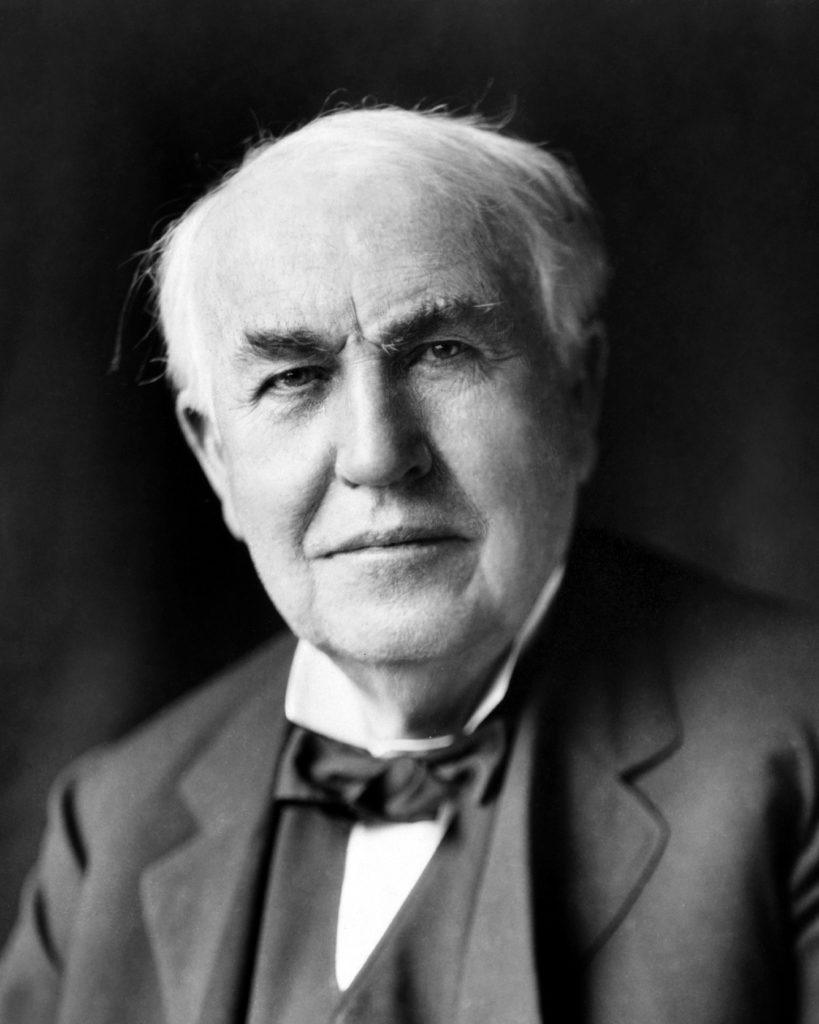
I think a lot of the allure of flashmobs is that for the most part, we live in a society where entertainment is provided, prepackaged. Until 1877 when Edison invented the phonograph, if you wanted to hear music, you gathered some friends with instruments and songbooks and made some. If you wanted a theater experience, you played charades. Public concerts outside of major cities were few and far between. Now, every tiny town has live music 20 or 30 nights a year, and many have music every weekend night all year long. We are, for the most part, deprived of the opportunity to not only make our own entertainment but perform it for others. The flashmob at the Holyoke Mall had one day’s notice, no rehearsal. Singers were to wear a solid color indicating their part (my alto wife wore green, other parts wore red or white)—and of course, many people who just happened to be there joined in the singing.

Thursday, I received an e-mail from the organizer of a local folk music sing-along: a flashmob would gather the following day to sing Handel’s Hallelujah Chorus at the food court of the largest shopping mall near us, the Holyoke Mall (halfway between our house and Springfield, in a town of 40,005). On a Friday night just before Christmas, it would certainly have an audience. Better still, it was organized by the local opera company; the singing would be worth hearing.

The next morning, my wife, D. Dina Friedman, who sings in a community chorus, got an e-mail about the event that went out to all the chorus members. This was looking better and better. And the timing was perfect; we could drop our son off for the final rehearsal of his school’s winter show, go sing, and be back at school in plenty of time to watch him perform.

The singing was magical. Sound coming from every corner of the large and crowded food court, and a few stunningly stellar voices rising above the crowd. It reminded me of the time more than 30 years ago that I happened to be out on a lawn at my college while the chorus was rehearsing for their upcoming tour, and they invited me to stand within their circle and be surrounded by beautiful sound.

What amazed me the most, though, was not the event, but the aftermath. By the time we returned home after Rafael’s show, when I went to post something on Twitter, I found links to at least two different videos, including this very high quality one posted on the Springfield newspaper’s site.

I sent the link around, and got a couple of “wish I was there” or “how did you find out?” responses. And then last night, I went to a different performance, more than 40 miles away from the shopping mall at a retreat center in a really remote area (it happens to be the most beautiful house I know, one I love to visit for this annual storytelling concert)—and at intermission, I heard people talking about the flashmob and wishing they had known ahead.

In other words, even without a big-city backdrop, this flashmob had an impact well beyond the borders of the food court. E-mail made the event possible; social media gave it permanent life. “And I say to myself/What a wonderful world.”

Switch to our mobile site