Finishing Isn’t the Only Reason to Start
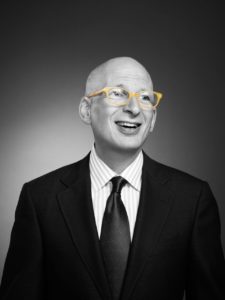
Sixteen years after it was published, I’m reading Seth Godin’s book, Linchpin. I read his blog daily and have read several of his books. I also have a copy of an even earlier one, Purple Cow, on my to-read table.
His thesis is that workers should make themselves indispensable—not as prima donnas who nobody can work with, but as innovators who add far more value than they’re paid for because they take joy in it. And that managers should be eager to hire those folks and give them leeway and support to bring their A-game creativity, rather than crushing their souls in a rigid corporate culture.
One of Seth’s mantras has always been “ship your product.” Get it done, send it out into the world, and then tweak it. That’s what Apple and Microsoft both do (as we millions of unwilling beta testers can attest). That’s what Walt Whitman did, with his nine(!) different editions of Leaves of Grass, each time adding poems, changing the typeface, using a different author picture. And that’s what I’ve done with two series of marketing books, each of which started as a small self-published book, went to a major publisher, and then to a smaller publisher. So six of my ten books are actually series, with each new title more comprehensive, more up-to-date. I could easily write a fourth in each series, as a lot has changed since the most recent ones came out.
All well and good. BUT I take issue with Seth’s statement, “the only purpose of starting is to finish.”
I understand why he says this. He says many times in this book that real artists finish projects. His audience for that remark is the dreamers who doodle something amazing but never build it, never test it in the real world, never refine, iterate, or ship. To him, those folks are no better than the corporate cogs. But I do finish projects, when finishing the project makes sense. Thus, for me, starting a project is a way of exploring whether it’s worth completing.
As noted, I’ve written ten books. But I’ve probably written at least a dozen proposals or at least outlines for books I never wrote, not to mention dozens of unfinished blog posts, etc. I’m not a bad person because I didn’t finish those projects. In the 1990s, I wrote proposals like How to Find Your Next 10,000 Ideas and Sunshine on Your Shoulders (an ordinary person’s guide to renewable energy). The idea book was originally aimed at writers and called How to Find Your Next 10,000 Article Ideas.
Then I realized it would also be useful to clergy writing sermons, teachers doing lesson plans, and of course, inventors (among many others). I didn’t want to publish that one myself and I think I did send it around—with a sample chapter on finding ideas in classified ads, so maybe it’s just as well that I had no takers. The chapter would have been obsolete within a few years—and now, you could just ask an AI engine and get back hundreds of ideas per minute.
For the sunshine book, I realized that even though I’d already been doing marketing copywriting for green businesses and nonprofits for more than a decade (and by now, for more than four decades), I didn’t have the technical knowledge and there was no way to keep up because that world was evolving almost daily. It would have been obsolete before it even went to press. But I had to write the outline to figure that out. Starting and not finishing the proposal was the right choice, because the proposal made it clear that I didn’t want to put in enough effort to become expert in a sector that was and still is changing constantly.
Around 2003, I started revising my 1995 book on having fun cheaply. I completely overhauled and rewrote a couple of chapters, mostly adding information about Internet resources for things like travel planning. Then it hit me that it had taken me eight years of hard work to sell through a small print run of 2000 copies. I did a lot of things right, had major press coverage from the Christian Science Monitor to Redbook, did tons of radio interviews—but this book had only a very small market, because frugalists don’t like to spend money on books. I asked myself why I was putting so much effort into a book I already knew would be a flop, and I stopped working on the rewrite.
Abandoning all of those incomplete projects were each smart business decisions.
In 2020, during the pandemic, I came up with a great idea for a book: Leveraging the Great Pivot: How the Post-Pandemic Era Could Be Different, and Better: Long-Term Post-COVID Opportunities for Racial Justice, Economic Advancement, and Environmental Healing. This would have been a huge, sweeping book that had the potential to alter society for the better—IF I could successfully leverage it and get it in front of major influencers.
Again, this wasn’t one I would publish myself. I wrote a strong proposal that included about 90 people I’d try to interview (some famous, some not); annotated competitive title analysis with sales ranks; a summary of the marketing strategy including a named charity partner I’d worked with before, and more. I had the proposal pretty close to finished but never completed it. I suspect that once the first COVID vaccines were announced, I realized that taking one to two years to write the book and the publisher then taking at least another year to publish meant that the book would be written for a world that no longer existed by the time it came out. And I wasn’t ambitious enough to rush it into production, especially because I recognized that rushing would mean a book of lower quality, that I’d be less proud of, and would be less effective in fostering the creation of that new world.
Instead, I suggested to one of my book shepherding clients that she put her full-length book project on hold until working at offices was a thing again, and instead spend three months to write and publish an ebook on thriving during the crisis. This was quite different from the book I’d have written and was not going to create any moment to completely reinvent the world—but helping her through it satisfied my need to make some difference in that crazy time.
Side question: How might Seth write it differently in today’s AI age? While we’ve evolved from the days where many people had no goal other than to be a replaceable but steadily employed cog in a factory, how do we re-evolve when machines can do almost everything we do, and do it much faster and less expensively (but, so far, not as well). He is a futurist who’s been aware of AI for a long time, and who both uses AI extensively and has a lot of criticisms of it—so maybe it wouldn’t be any different. But maybe it would be completely different.